Are you taking your students to a Spanish-speaking country like Spain or Costa Rica this summer?
How exciting! If you’re traveling internationally with students, you need to make sure that your students are well-prepared for the experience. I’m sure you know that good preparation will make your trip run much more smoothly, but it can also help your students get a lot more out of the experience. Giving your students the best experience possible is about more than just having no major incidents (although no incidents is always worth celebrating!)
Hi, I’m Kristin from Growing Global Citizens! I’ve taught languages in international schools around the world, traveled to over 50 countries, and led a dozen trips for high school students to multiple countries, so I know that preparation can make or break the trip!
If you can’t travel internationally, try these field trip options:
- Best Overnight Spanish Class Field Trips in the U.S.
- Spanish Class Field Trip Ideas
- How To Create A Virtual Field Trip For Spanish Class
Trip Tip 1: Build Community
Having a group that gets along well can make or break your trip. Trips are often made up of students that don’t know each other, even if they go to the same school. Be deliberate about making time for ice breakers and activities that build community in your pre-departure meetings, at the airport and even during the trip. Play name games. They may be silly but there is nothing worse than realizing students don’t know each others’ names at the end of a three-week trip.
Trip Tip 2: Overinform and Overcommunicate
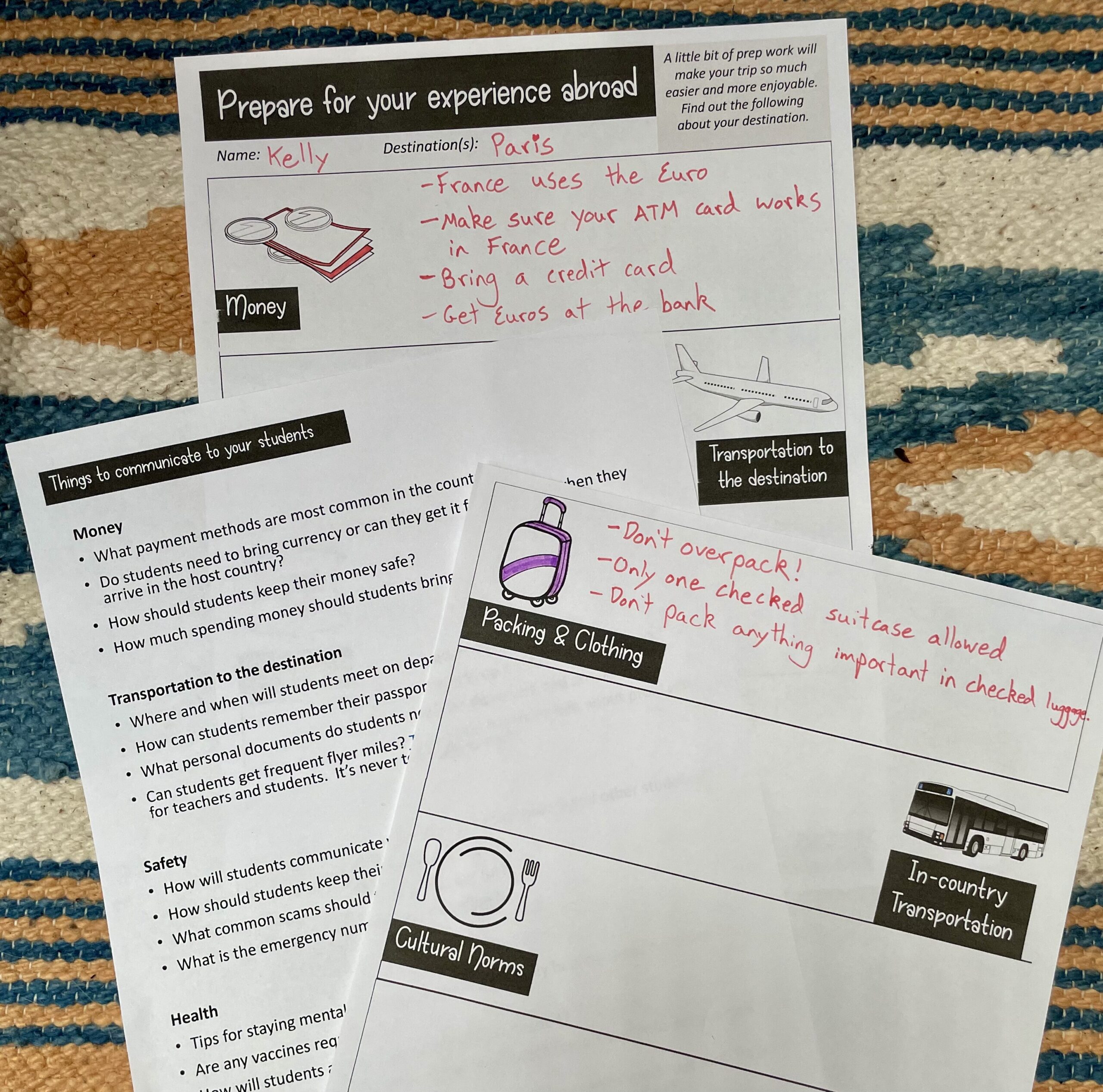
Nothing worries parents more than not knowing where their children are or what they will be doing. Communicating everything about your itinerary, safety plans, and communication plans will help parents feel more comfortable and go a long way towards building trust. When you alleviate parent and student worry you will save yourself from parent messages or calls in the future.
Give students these informational worksheets to write down important trip information. Or, have them research and prepare a section in small groups. This way, students can be more involved in the planning and become the go-to experts during the trip.
Tip 3: Set Clear Expectations for Student Behavior
Students are in a new country, with a new group of people and staying in unfamiliar lodging. The environment is different, so make sure to explain the expectations so everyone is clear. When do they need to be back at the hotel/their host stay? Do they need to be in their rooms at that time? Can they go in their friends rooms? What do they do if there is a problem in the middle of the night?
This can be difficult because often teachers don’t know the answers to these questions until they arrive at the hotel, talk to their colleagues or group leader, and evaluate the set-up. However, the sooner you can communicate your expectations to students, the better. For more details, read this post about staying in hotels with students.
Many teachers have a zero tolerance policy for alcohol and illegal substances, as in “if you drink, you’ll be sent home”. This is fair, but you need to be 100% sure that this is crystal clear to students and families before the trip and you need to make sure you’ll be able to enforce this. Nothing encourages breaking the rules more than when students hear about strict rules but then see that teachers do not enforce them.
Tip 4: Anticipate and Teach Cultural Differences
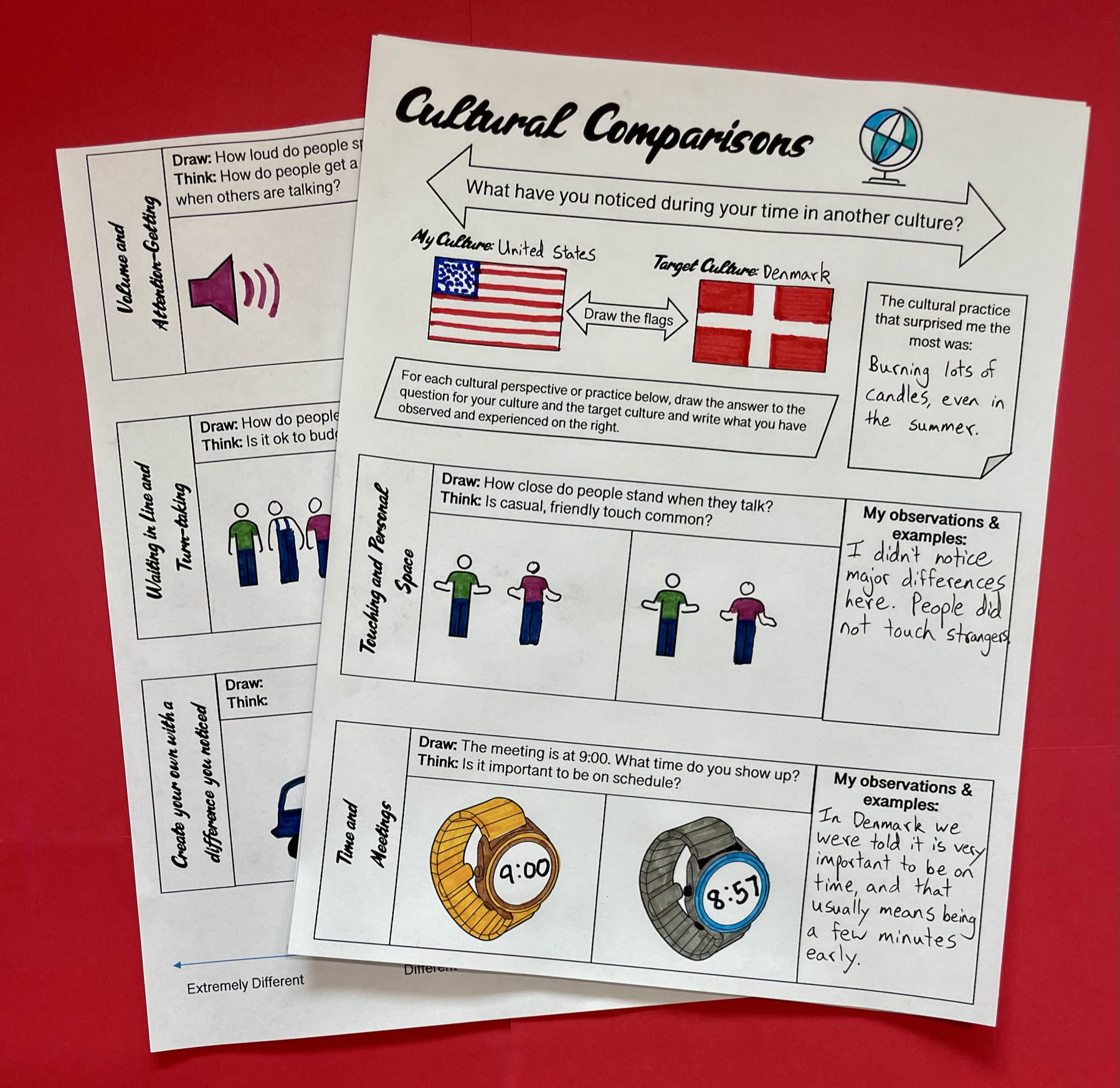
One thing is certain when traveling internationally–students will see and experience things that are different and not done the way they would do them. When students see something that is different from their culture, like eating dinner at 10:00pm, or squat toilets teach them to say “that’s different” or “that was unexpected” without passing judgment, instead of saying “that’s weird”.
Teaching mini lessons about intercultural communication topics like personal space, time attitudes, and more can give students a framework for understanding the cultural differences they are seeing.
Get these worksheets to work through with your students while you are in the country or after your trip.
If students are staying with host families then preparing them for likely cultural differences and family expectations is important. Taking a 15-minute shower in the United States would not be a big deal, but it could be in Spain or Colombia.
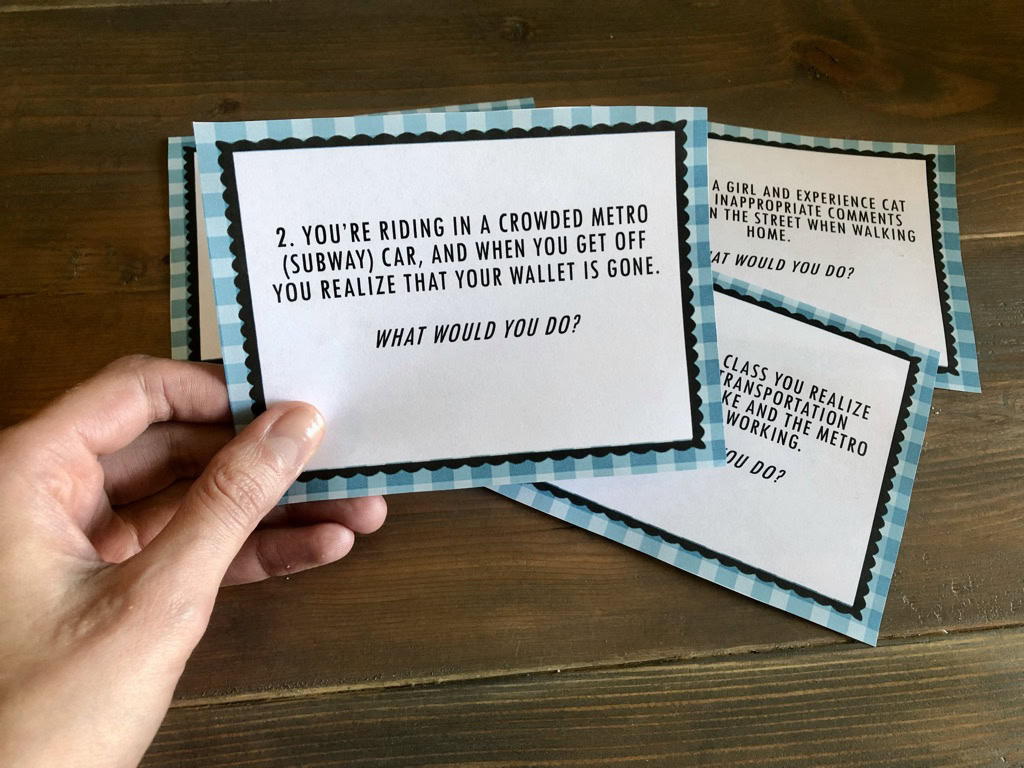
Work through hypothetical What Would You Do If…? Situations for host families with these cards.
Have questions about traveling with students? Join the Educational Travel and Student Trips Facebook group to ask all your questions!
Tip 5: Prepare for Large or Small Health and Safety Issues
Having a small first aid kit with scissors, tape, band aids, hand sanitizer, etc. can go a long way towards preventing small issues from getting worse. It’s a good way to keep an eye on students and check in with them (how is that scraped knee today?) to show that you care.
I’ve gone to the hospital with students in multiple countries (they were all ok, don’t worry!) and knowing where the closest hospital is and what you need to bring (passport, parent permission?) will make it easier and faster in an emergency.
Tip 6: Share About Your Trip!
You’ve had a fun, successful and educational trip, so don’t forget to celebrate and share about it! Think of creative ways for students to share their trip, for example, at assemblies, back-to-school nights, community events, and more.
Not only is this a way to provide closure and celebration to a trip, but it’s a great way to recruit students for the next trip and to attract future students to your language program, too!
I hope this post has given you lots of tips for preparing for your adventure. Have a great trip!

More posts on Traveling with Students


-
Sale!

Spanish Cognates Lesson Plans 1st Day of Spanish Class & First Week of School
Original price was: $22.11.$14.49Current price is: $14.49. Add to cart -
Sale!
Back to School BUNDLE
Original price was: $19.30.$15.65Current price is: $15.65. Add to cart -
Sale!
Back to School Spanish Starter Pack
Original price was: $8.45.$5.59Current price is: $5.59. Add to cart -
Sale!
RAINBOW Classroom Decor BUNDLE
Original price was: $18.41.$12.45Current price is: $12.45. Add to cart