Teaching body part vocabulary in Spanish is a fun unit to include no matter how old your students are! From elementary to high school, it’s great for students to be able to describe themselves, especially if something is hurting and they need to communicate that. Here are some fun activities for teaching doler y el cuerpo in Spanish class!
Brain Breaks for El Cuerpo Vocabulary
During traditional units we would always start by front-loading the vocabulary. I really liked to include lots of songs and games to help them! Here are some of my favorites:
- Simon Says
- Run and Touch a Color – call out instructions for the students to follow, connect it to body parts by saying things like, “Run and touch red with your elbow”.
- Head, Shoulders, Knees, and Toes
- Labeling Body Brain Break – I love brain breaks, but this is one of my favorites for this unit!
Teaching Doler y El Cuerpo in Spanish Class
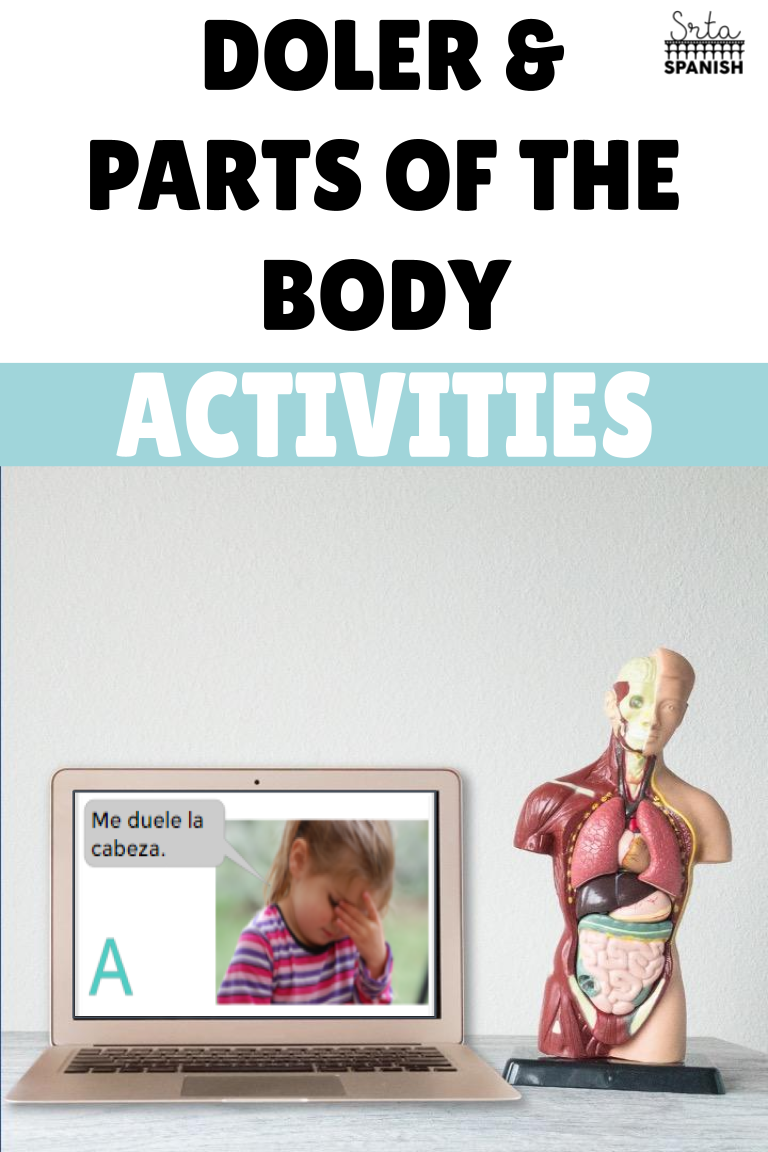
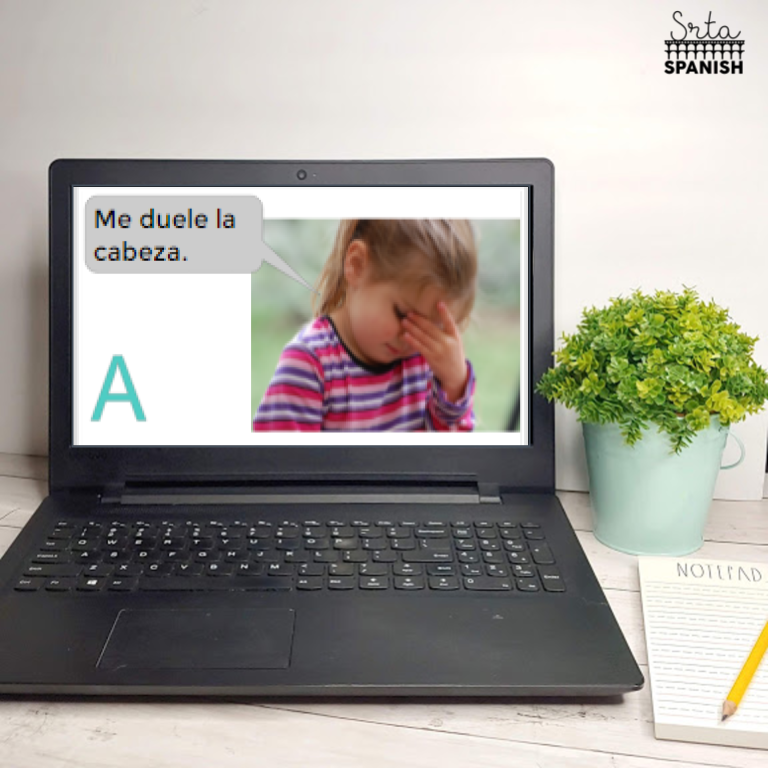
After we’d done some work with the body part vocabulary, I would introduce doler with a presentation! The phrase “¿Qué te duele?” is introduced first with students responding and practicing the body parts, then are provided with an explanation of doler, likening it to the verb gustar. Students then complete more practices, choosing the correct form of doler and describing the body part that hurts according to the picture on the slide. It’s a great way for them to ease into it, and rely on pictures to practice!
Creative Speaking and Listening Activities
After your students get comfortable with the basics of doler y el cuerpo in Spanish class, it’s time to add more real-life application and interaction. One fun way to do this is through roleplay scenarios. Have students pretend they are visiting a doctor and describe what hurts. One student can be the patient, while the other plays the doctor giving advice. These little skits are fantastic for reinforcing sentence structure and vocab, and they usually bring out a few laughs too!
Another simple but powerful idea is a listening and drawing activity. Say out loud what hurts on a cartoon character like “A María le duele la cabeza”, and students draw the character with a worried face and a little lightning bolt near her head. The drawing helps them visualize the sentence and lock in meaning through context.
Practice Activities for Doler y El Cuerpo
After introducing doler, we do a lot of practice activities with it! One of my all time favorites is ¡Corre en Círculos! There are two versions of this activity included – one where students look at a picture and write the body part in Spanish, and one where students look at a picture and a subject and write a sentence using doler. Sometimes we use the vocabulary version as a mini puzzle!
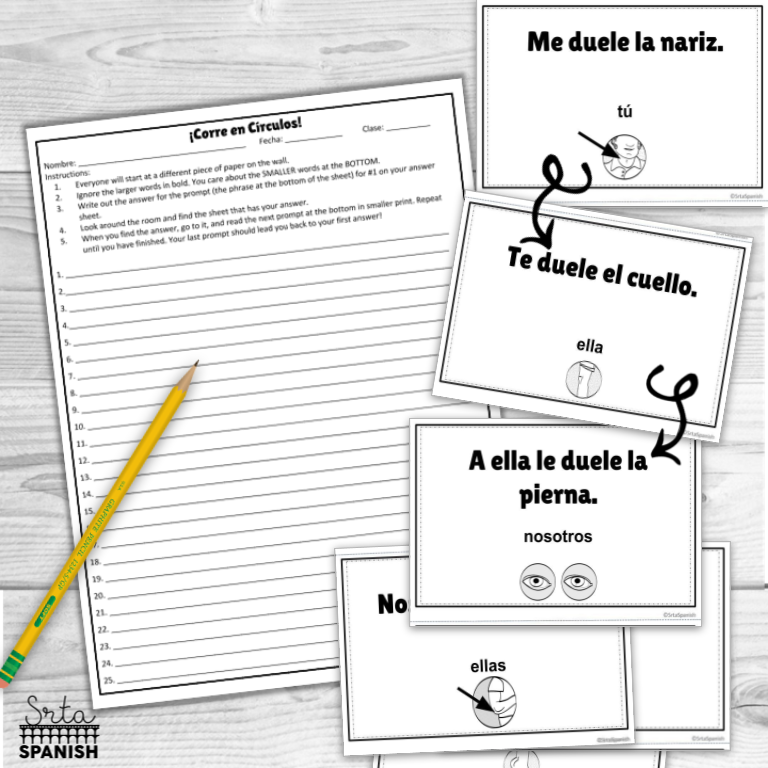
After the scavenger hunt, I like to have another practice assignment ready. The first sheet reviews the verb doler and its structures, then students practice by reading sentences and illustrating their meaning. The third page is a writing practice. Students look at a subject pronoun and images of body parts, then create a sentence using the verb doler.

Your students can practice reading, writing, listening, and vocabulary skills with these digital task cards! Boom Cards are digital interactive task cards that provide instant feedback for your students as they practice. This resource uses the online platform boomlearning.com. New to Boom Learning? Learn more about the platform here!
You can also find my bundle of activities for doler y el cuerpo in my shop!
Review Games to Reinforce Doler and Body Parts
To keep students on their toes, mix in games like Four Corners with vocabulary words taped up in each corner. Call out a sentence using doler and a body part, and have students move to the correct word. It’s low prep, high energy, and sneakily educational.
Another crowd favorite during teaching Doler y El Cuerpo in Spanish class is Memory Match. Create pairs of cards, one with a sentence using doler and the other with a picture representing it. Students flip them over and try to make a match, reinforcing both reading and comprehension skills.
You can wrap up the unit with a class-made story. Let your students create silly tales about imaginary characters getting hurt in wacky ways. “A mi monstruo le duele la cola porque bailó mucho” is always a hit. These stories turn practice into creativity and laughter.


-
Sale!

Spanish Cognates Lesson Plans 1st Day of Spanish Class & First Week of School
Original price was: $22.11.$14.49Current price is: $14.49. Add to cart -
Sale!
Back to School BUNDLE
Original price was: $19.30.$15.65Current price is: $15.65. Add to cart -
Sale!
Back to School Spanish Starter Pack
Original price was: $8.45.$5.59Current price is: $5.59. Add to cart -
Sale!
RAINBOW Classroom Decor BUNDLE
Original price was: $18.41.$12.45Current price is: $12.45. Add to cart