Do you have questions about the Seal of Biliteracy and how it could benefit your students? Need a teacher’s perspective and not just the website info? I got you covered!
What Even Is the Seal of Biliteracy?
The Seal of Biliteracy is an academic honor awarded to high school graduates who can demonstrate proficiency in English and one other language. It’s a resume-builder that lets employers, colleges and scholarship awarders know that a student has a unique skill.
Why would my students want to earn the Seal of Biliteracy?
Although the Seal of Biliteracy is not a new concept, it is not universal in the United States. Many high schools do not offer this opportunity to their students. And among those that do, not all students earn the Seal. That means that students who DO earn the Seal of Biliteracy are part of a small number of US high school graduates that can claim this honor!
It will put them to the top of the pile for scholarships and job applications! In some states and with some universities, a passing score on the Seal of Biliteracy test will give them college credits or test them out of WL requirements while in college.
It’s also a tangible reward for working hard and building proficiency over many years!
How do I get it started in my school?
Here are the things that would need to happen, though the order of events may change based on your situation.
First, talk to your department coordinator and come prepared with information to convince him/her that this would be beneficial to your students. If your school or district is not interested, there’s no reason to go further.
Next, you would need to find out what a passing score is in your state. It varies from state to state!
Assuming you get the green light from your district, devise a plan for how to explain to your students, how to get them signed up and how to administer the test.
How much does it cost?
The cost depends on what test your district chooses to use. My district uses the AAPPL test from ACTFL. It has 4 sections (reading, writing, listening and integrated listening and speaking). The total cost of the full test is $20. Once a student passes a particular section, they are done! They can re-test only the section(s) that they did not pass for a reduced cost.
We also use the STAMP test because more languages are offered with that test. It costs a lot more, though the design is the same. I believe the cost of that test is around $80. My school subsidizes $40 of this test to help bring the cost more in line with the AAPPL test for students who are using STAMP because AAPPL doesn’t offer the language they want to test in.
How is the test administered?
There are many options. Where I live, my children take the test during school. Our district administers the test every 2 years to all students, and they use the scores and data to track progress.
Where I work, the students must take the test on their own time. Students can pause the test and do not need to complete all of the sections at once. With AAPPL, there are 2 options for “proctoring”. A parent/guardian can sign a paper and agree to proctor and supervise their child. You can also pay a $4 fee and the AI of the software of the AAPPL test will detect suspicious behavior and will mark student tests as “non-rateable” if cheating is suspected.
What can I do to make sure my students are prepared?
There are lots of things we can do to make sure our students are prepared to do well on a Seal of Biliteracy test. I don’t think of it as teaching to the test. I think of it as teaching students skills to build proficiency all year long.
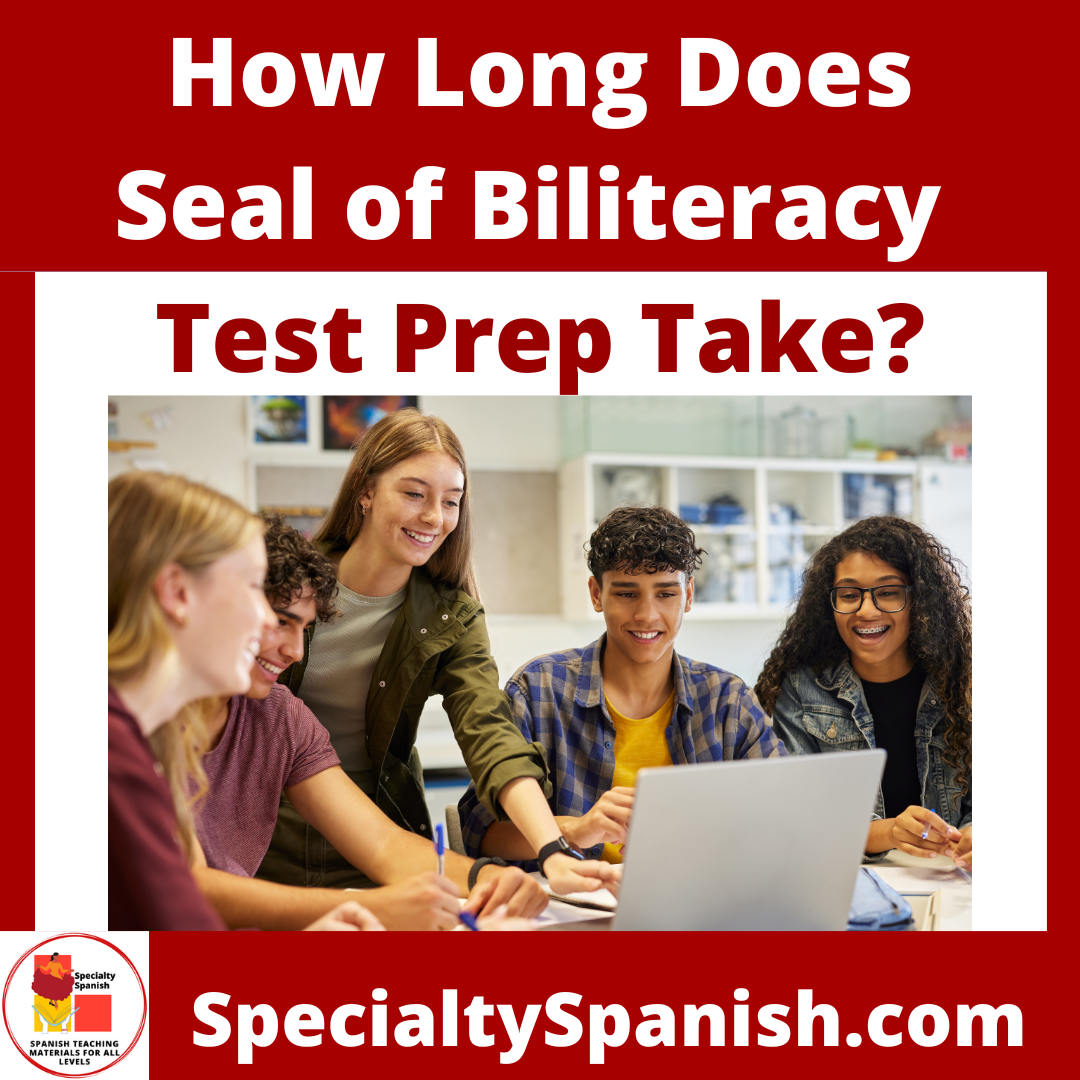
First: educate yourself about the test your students will be taking. What are the questions like in each section?
Second: create activities for your classes that mimic the test activities. I’m not saying that every activity must match the test format. But having familiar tasks will make the test easier and less anxiety provoking for students.
Another trick is to teach students some key phrases. On the AAPPL test, there are 3 phrases students will hear in the integrated listening and speaking: “Dame detalles, hazme preguntas and cuéntame”. Making sure your students have heard these expressions many times will help a lot! HERE is a freebie Listen & Respond activity to get you started!

Another activity I have integrated into my daily lessons is a speaking warm-up. Mine are usually based on the theme we’re learning about or a season. (On the AAPPL test, students won’t know ahead of time what the topics will be). But each day, I have a new prompt on the board and students have a minute and half to talk to their partner or ask questions. Being asked to speak spontaneously every day without time to think and prepare is helpful for when they need to do that on the Seal of Biliteracy test!
I have tons of knowledge and hints that I’ve collected over the years! Email me anytime if you have more questions! Jamie@SpecialtySpanish.com
About the Author
About the Author:I’m Jamie from Specialty Spanish. I have been a high school Spanish teacher at the same school for 26 years! I specialize in teaching the upper levels of Spanish and though I love teaching AP/Dual Enrollment, my favorite year is Spanish 3! I love making teaching easier and more enjoyable for other teachers. Check out all my tips here!
Resources
- Seal of Biliteracy Official Website
- Spanish Seal of Biliteracy Test Prep Bundle
- Spanish Interpersonal Speaking 16 Activities for Conversations by Common Themes
- Spanish Scenario Task Cards Bundle of 17 Themes for Speaking & Writing
More Posts on the Seal of Biliteracy
- The Seal of Biliteracy
- Reading Skills For the Seal of Biliteracy
- Writing Skills For the Seal of Biliteracy
- Interpersonal Listening and Speaking Skills for the Seal of Biliteracy
More Tips for Teachers
- How to Lesson Plan for Spanish Class
- Classroom Rules in Spanish Class
- How to Design a Unit Plan for Spanish Class
- How to Create a Force Copy Link on Google Drive
Check out all of my posts with faqs and helpful tips for teachers here!


-
El Día de los Muertos Activities Day of the Dead Escape Room Spanish Lesson Plan
$4.25 Add to cart -
Sale!
Día de los Muertos Activities for Exploring Day of the Dead
Original price was: $12.59.$8.12Current price is: $8.12. Add to cart -
Día de los Muertos Day of the Dead Digital Activities in English
$3.75 Add to cart -
La Familia Spanish Family Tree Vocabulary Activity Reading Comprehension Passage
$5.25 Add to cart