Let’s talk about how to include geography in your classes! I’m not sure if you’ve ever experienced this, but it totally drives me crazy when students have no sense of where things are in the world. I try to weave in geography skills throughout curriculum to prevent those moments. Here are several ideas for how to teach Spanish-speaking countries!

Some of the links in this post are affiliate links. This means if you click on the link and purchase an item, I will receive an affiliate commission at no additional cost to you. Thank you!
Watch the Video
How to Teach Spanish-Speaking Countries
Learn the Spanish-Speaking Countries

The first step is just getting students to know the names of the countries and hearing them. Sometimes they don’t even know WHAT is a country! So let’s look at countries and flags – introduce the countries and their flags while you are working on colors with your students. You can do one country a day, or do a whole bunch in one lesson!
Spanish-Speaking Countries’ Flags

You can also hang up a classroom display with all the flags – either ones your students have colored, or print colorful ones and hang them up! When you mention a country, you can point and pause to its flag to help connect that symbol. If you have a big map in your classroom, point to the location as well!
Interactive Ways to Teach Spanish-Speaking Countries
When it comes to showing your students how big and vibrant the Spanish-speaking world really is, hands-on and interactive activities work wonders. A fun way to introduce countries is with a classroom passport. Yes, an actual mini passport that students “stamp” as they explore different countries that speak Spanish. Whether it’s through videos, readings, songs, or food discussions, students light up when they feel like they’re traveling the world right from their desks.
Another way to spark curiosity? Use mystery country clues. Every week or so, give them facts about a Spanish-speaking country and let them guess where it is. You can share the answer the next day and then dive into a few highlights of the culture, geography, or language differences. It’s low prep and keeps them engaged and thinking about the Spanish-speaking world beyond just grammar and vocab.
Spanish-Speaking Countries Map Printable
In the first quarter of the year, I like to do some direct practice learning where they are located with maps & activities. This map of countries that speak Spanish pdf comes with several pages of activities! It includes:
- labeling the countries that speak Spanish on the map
- regions of the world and placing the Spanish-speaking countries within them
- fill in the blank of the capitals
- answer keys

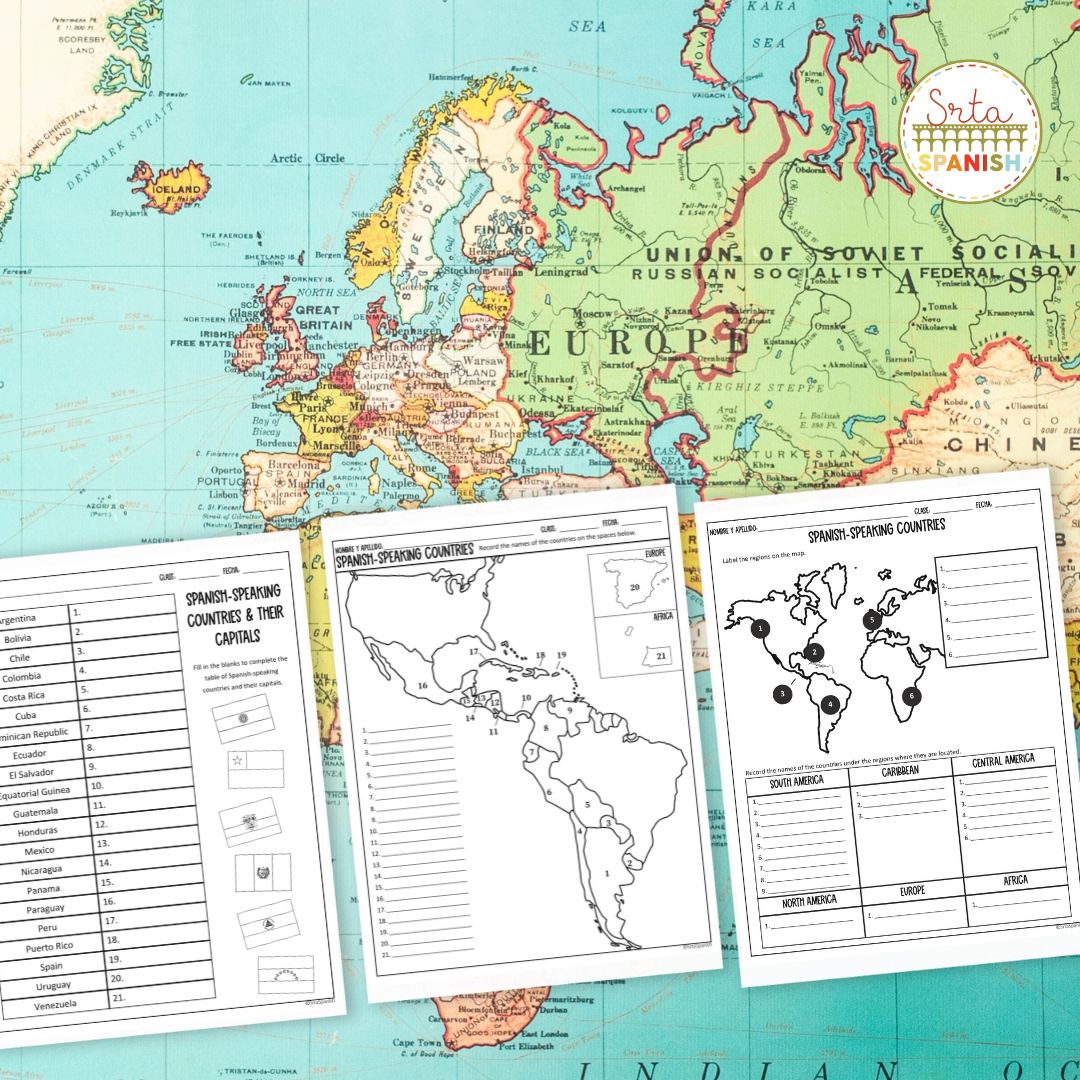

All of the pages are included with the countries’ names in Spanish or English, and there are variations with and without the United States as a Spanish-speaking country. This is great if you want to teach about the countries that speak Spanish IN Spanish. Choose which variations are best for your classes!
Geography Games
Map Guessing Game with Geoguessr
This digital review game is a fun mix of guessing, context clues, and Google maps. Click here to learn how to play!
Spanish-Speaking Country Map Review Game
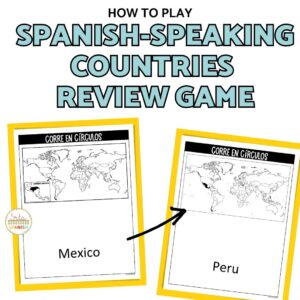
This scavenger hunt style game gets students up and moving as they identify countries on a map. Click here to learn how to play and grab the printable PDF!
Use Tech and Culture to Deepen the Connection
Teaching geography does not have to mean endless map drills. If you’re wondering how to teach Spanish-speaking countries with tools students already love, try a digital scavenger hunt. You can build one using Google Earth or Slides where students “travel” to a city, look for landmarks, and write down things they notice. Bonus points if you tie in vocabulary they’re learning or have them describe the weather using target structures.
And let’s not forget music and food. When introducing a new country, feature a traditional song or dish and let it lead the conversation. Show a clip, play a snippet, or share an image, it does not have to be a full-on lesson every time. These cultural nuggets are powerful, and they help your students form real connections to the Spanish-speaking countries you are teaching about.
Keep it simple, keep it fun, and stay curious right alongside them. Teaching Spanish-speaking countries does not have to be complicated, but it can be unforgettable.
Daily Routines
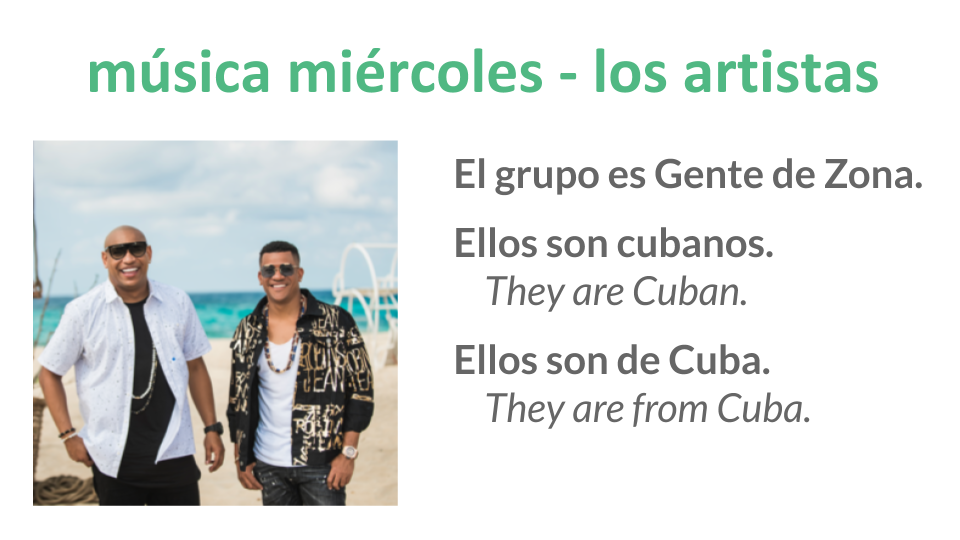
As we start getting into classroom routines, one of my favorite weekly routines is Música Miércoles. I use the routine from Mis Clases Locas, but I add a slide before the song to introduce the artists and what country they are from. Some days we circle this a little bit, some days I pull up a map to make sure we’re all clear on WHERE the country is, and some days we go over it and move on.
Virtual Field Trips through Spanish-Speaking Countries

These are such a go to for me. I use ‘em at the start of the unit, at the end of a unit, for cultural celebrations, even sub plans! They are SO good for geography skills because students are navigating a map while they do it. Some teachers have mentioned that they use them weekly as part of their lessons, too! If you’d like to learn more about virtual field trips and grab a free trip to try out in your classroom, make sure to check out this post here.
I have created virtual field trips for you on a wide variety of countries and topics! Check them out below!
- Argentina
- Bolivia
- Chile
- Colombia
- Costa Rica
- Cuba
- Dominican Republic
- Ecuador
- El Salvador
- Equatorial Guinea
- Guatemala
- Honduras
- Mexico
- Nicaragua
- Panama
- Paraguay
- Peru
- Puerto Rico
- Spain
- Uruguay
- Venezuela
Books Set in Spanish-Speaking Countries

Of COURSE we couldn’t talk about this without discussing readers set in Spanish-speaking countries. There are a ton of them, but this is a great way to help your students learn about Spanish-speaking countries. Check out my blog post here where I listed as many readers as I could for each country!
How to Teach the Spanish-Speaking Countries
I know there are a LOT more ways we can talk about countries around the world, especially when we’re thinking about sharing culture with students, but I’m going to stop here because I really wanted to try to keep this focused on the geography piece. If you’d like more ideas for what you can do in a culture class, make sure you check out my blog post here.

Save this post for later!


-
Sale!

Spanish Cognates Lesson Plans 1st Day of Spanish Class & First Week of School
Original price was: $22.11.$14.49Current price is: $14.49. Add to cart -
Sale!
Back to School BUNDLE
Original price was: $19.30.$15.65Current price is: $15.65. Add to cart -
Sale!
Back to School Spanish Starter Pack
Original price was: $8.45.$5.59Current price is: $5.59. Add to cart -
Sale!
RAINBOW Classroom Decor BUNDLE
Original price was: $18.41.$12.45Current price is: $12.45. Add to cart