Let’s talk about how to create a unit plan for Spanish class centered around a story – either one you’ve found or one you wrote for your students! We’re going to talk about why we should use stories in our classrooms, some possibilities for how to include them, and then we’re going to dig into how you can create a unit around a story in your world language classes.

Watch the Video to Create Unit Plan for Spanish Class
Why use stories in Spanish class?
Stories are a great way to give your students input in a way that’s very compelling for them. The language is accessible and the plot keeps things interesting! You can also use them to fit with different units you teach!
As students learn to read, incorporating short stories is a great way to help students put all of their skills together. Reading these Spanish stories for beginners will help them apply their vocabulary and high frequency verbs to become fluent readers.
How can you use stories to Create a Unit Plan for Spanish Class?
There’s a few different options for ways you can incorporate stories into your classroom. Here’s a few ideas:
- Add to your classroom library – if you do FVR in your classes, print and go stories are an easy (and cheap!) way to bulk out your options for your students
- Use for sub plans – pair them with a packet of reading activities for easy, low stress plans. Check out more on my sub plan reading packet here!
- Fill in a unit where they need more input – maybe you’re already working on a unit with your classes, but your formative assessments are clearly showing you that they need more input. Ah! Stories are a great option to give your students more language.
- Build your unit with the story as the centerpiece – last, but not least, let’s dig into this!
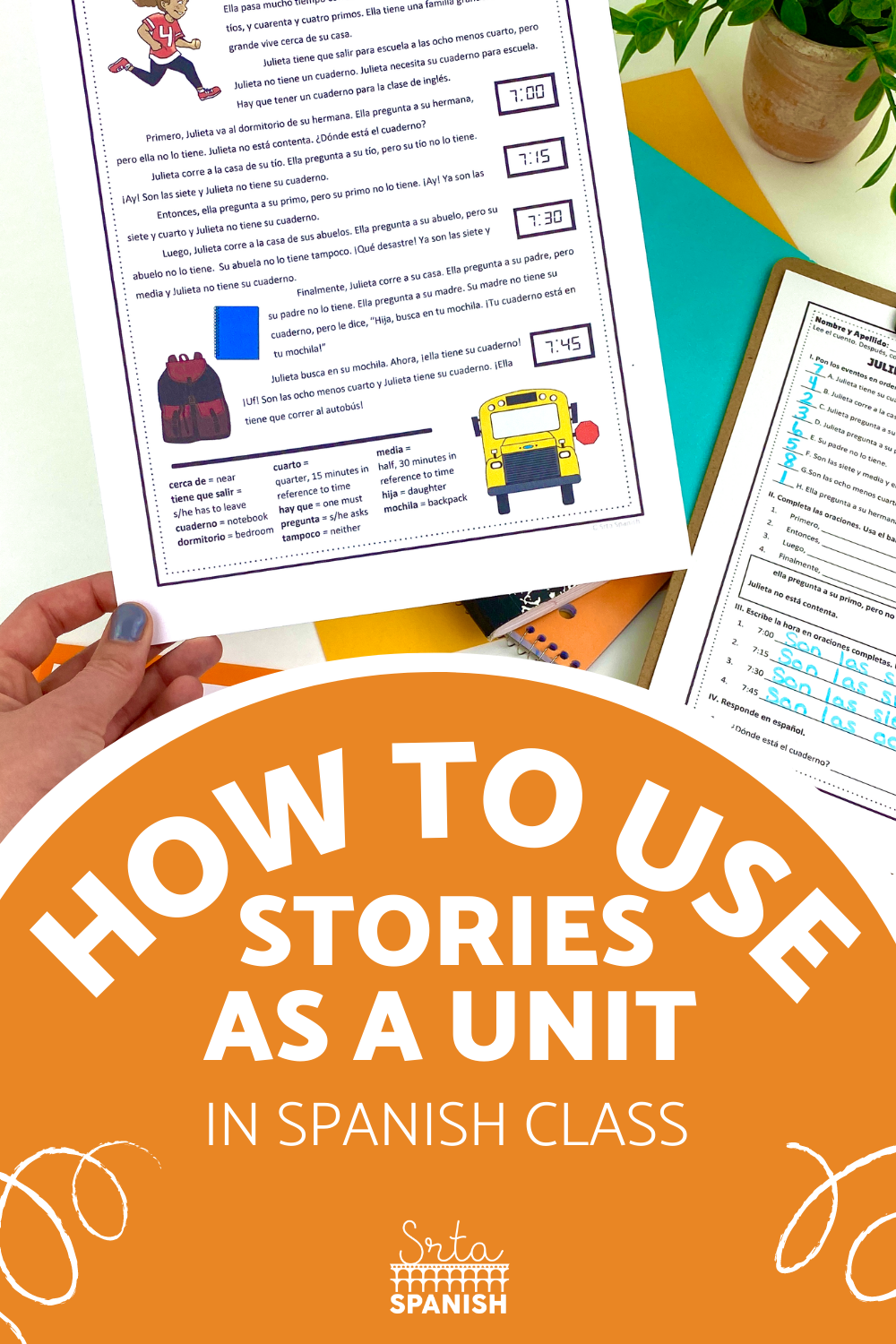
How to Design a Unit Plan for Spanish Class
Quick note before we get going – There is a LOT you can do with this. Basically every single step of this plan COULD be replaced with something else. I just want to give you an idea or two! Okay? Okay!
Pre-Reading
If necessary, before you start the reading itself, you may want to introduce the students to some of the vocab and structures included in the story. Here’s a few activities that work well for this segment of the unit:
- PQA
- 4 Corners
- This or that
- Parallel Universe
- Student survey – give them a Google Form asking for their preferences and opinions. Use lots of images to support vocab
- Picture or Movie Talk
- Gallery Walk
- Bunch of Hunches
Pssst… Most of these activities are linked in this spreadsheet, plus quite a few more. I think you’re going to love it – make sure you bookmark the page to easily return to for whenever you need inspiration!
Tell the Story
However you approach it, they gotta get the story. You might even do this step a few times in different ways. Here’s a few thoughts:
- Story telling
- Story asking (fill in the blank style)
- Read together
- Draw it as you tell it (they draw or you draw)
- Close reading
Extend and Lean In
You’ve got a good piece of material. Students are getting the idea. How can we stretch it to give them more input in interesting ways?
This segment of the unit plan is the trickiest for me as I’m writing this post. How do I share just SOME ideas for you!? Literally every reading activity ever fits here. I have tons and tons of blog posts on this. Plus, listening activities, puzzles, and partner games. Check out my spreadsheet with about 100 ideas if you need some inspo!
If you want a solid jumping off point that is less overwhelming than the spreadsheet, I recommend this YouTube video on my channel. It’s quick and to the point, with several options, but not SO many as to be overwhelming!
Assess
Let’s be honest, you’ve done this along the way with the various activities. But, maybe you want to check on how that input is sitting, or you want to communicate progress to stakeholders. Wrap up the unit with this step!
- Timed writing
- Blind retell
- True/false
- Translation
- Listen and draw
- Summarize & illustrate
- Put a spin on it
How long does a unit last?
When thinking about a unit plan for Spanish class, I would usually do this for 1-2 weeks (between 5-10, 50 minute class periods). The Extend & Lean In segment tends to be 3-4 days of class time, more if I feel like they need more with the language, or if we’re all really enjoying it! Sometimes you have a story or piece of material that is SO compelling you can really get a lot of language out of it before moving on.

Where do you find stories to use in your unit plan for Spanish class?
So, maybe your next question is, where do I GET stories to use with my students to create Unit Plan for Spanish Class? I just happen to have a list for you you can see here.

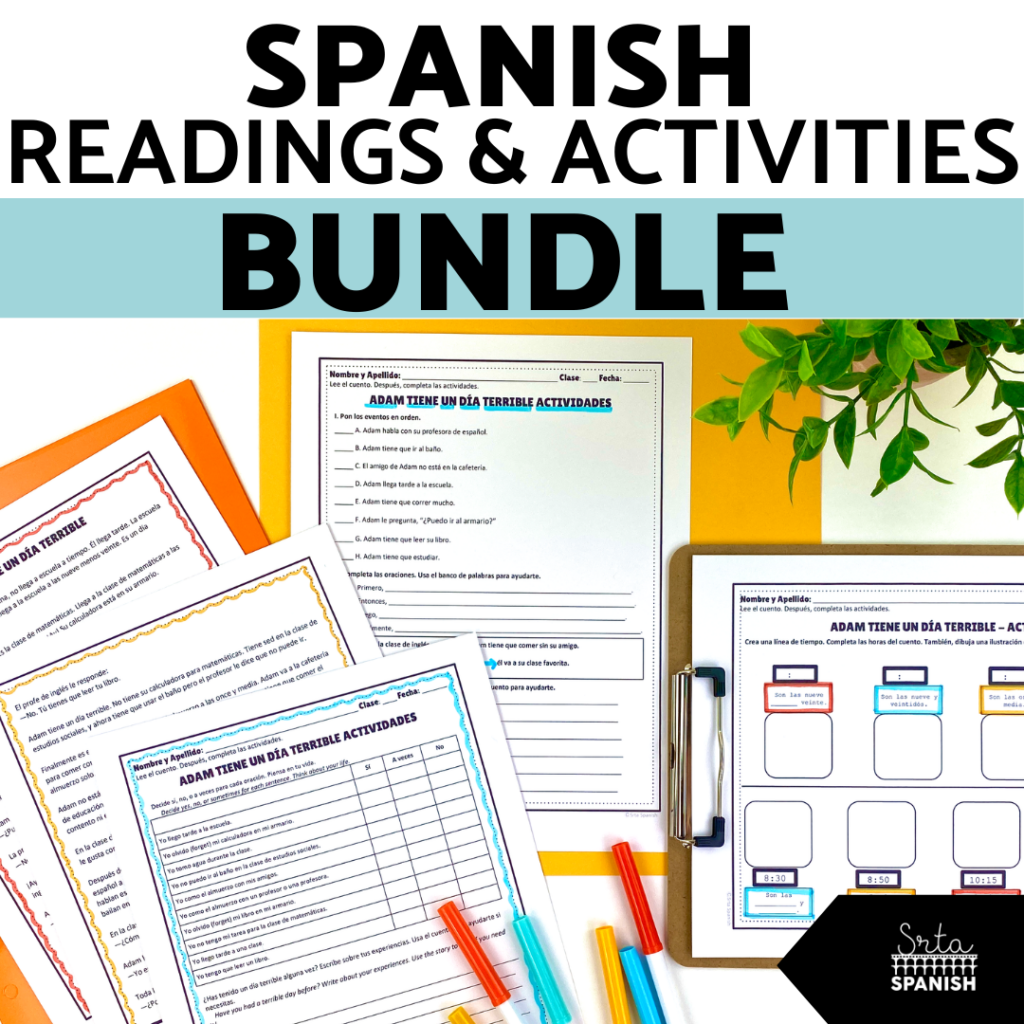
You might also like my set of printable stories and activities to go with them! Several of them I’ve outline a sequence of activities for you as well, in case you’d like to use them for a whole unit. Click here to see the bundle!
Retelling the Story in Creative Ways
Once students have read or listened to the story, retelling it in a new way can help reinforce comprehension and boost confidence. This part can be so much fun. Try having your students draw the story in four panels like a comic strip. Then, have them retell the story to a partner using their drawings as support. You could also do a story scramble where students get sentences or scenes from the story out of order and have to work together to put them back correctly.
Another favorite? Have groups act out different scenes from the story. You can give them a script or let them write their own. Add simple props and it becomes a highlight of the week. It’s a great way to see what they remember and which structures are sticking without doing anything high-pressure.
Retelling activities are awesome because they’re flexible. They can be quiet, creative, loud, silly, partner-based, or individual. You can mix and match depending on your group and your goals.
Connect the Story to Real Life
After students understand the story, this is a great time to help them make personal connections. Try adding a writing prompt that lets them relate the story to their own experiences. For example, if the story is about a character who has a problem to solve, ask students to write about a time they had to solve a problem too.
You can also do opinion polls related to the story. Create statements like “The main character made the right choice” or “I would have done something different” and let students show whether they agree or disagree. This gets them thinking critically and gives them more chances to use the language in a meaningful way.
Adding these activities to your unit helps your students connect more deeply with the story and gives you lots of chances to recycle vocab and structures in fun, low-stress ways.
Looking for more?
Check out these complete unit plans for your Spanish classes:
- Cognates Unit Walkthrough – Download the unit here
- High Frequency Verbs 1
- High Frequency Verbs 2
- High Frequency Verbs 3
- Days, Months, Numbers
- Ser & Descriptions
- La Escuela
- La Comida
- Day of the Dead
- Thanksgiving
- Los Pasatiempos
- La Familia y la gente importante
- La Ropa
- Los objetos de clase Unit Walkthrough – Download the unit here
- Los animales
- Puede..
- Jugar y los deportes
- En la casa
- AR ER IR Verbs
- Ir a Infinitive


-
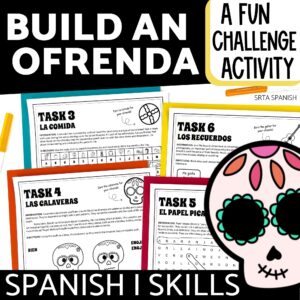
El Día de los Muertos Activities Day of the Dead Escape Room Spanish Lesson Plan
$4.25 Add to cart -
Sale!
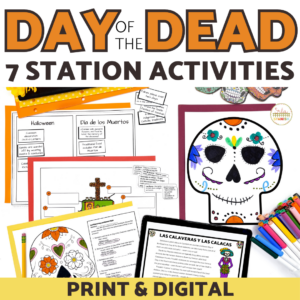
Día de los Muertos Activities for Exploring Day of the Dead
Original price was: $12.59.$8.12Current price is: $8.12. Add to cart -
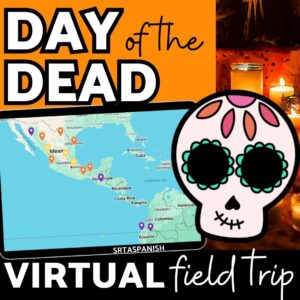
Día de los Muertos Day of the Dead Digital Activities in English
$3.75 Add to cart -
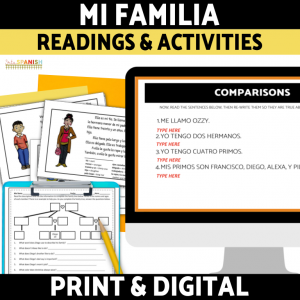
La Familia Spanish Family Tree Vocabulary Activity Reading Comprehension Passage
$5.25 Add to cart