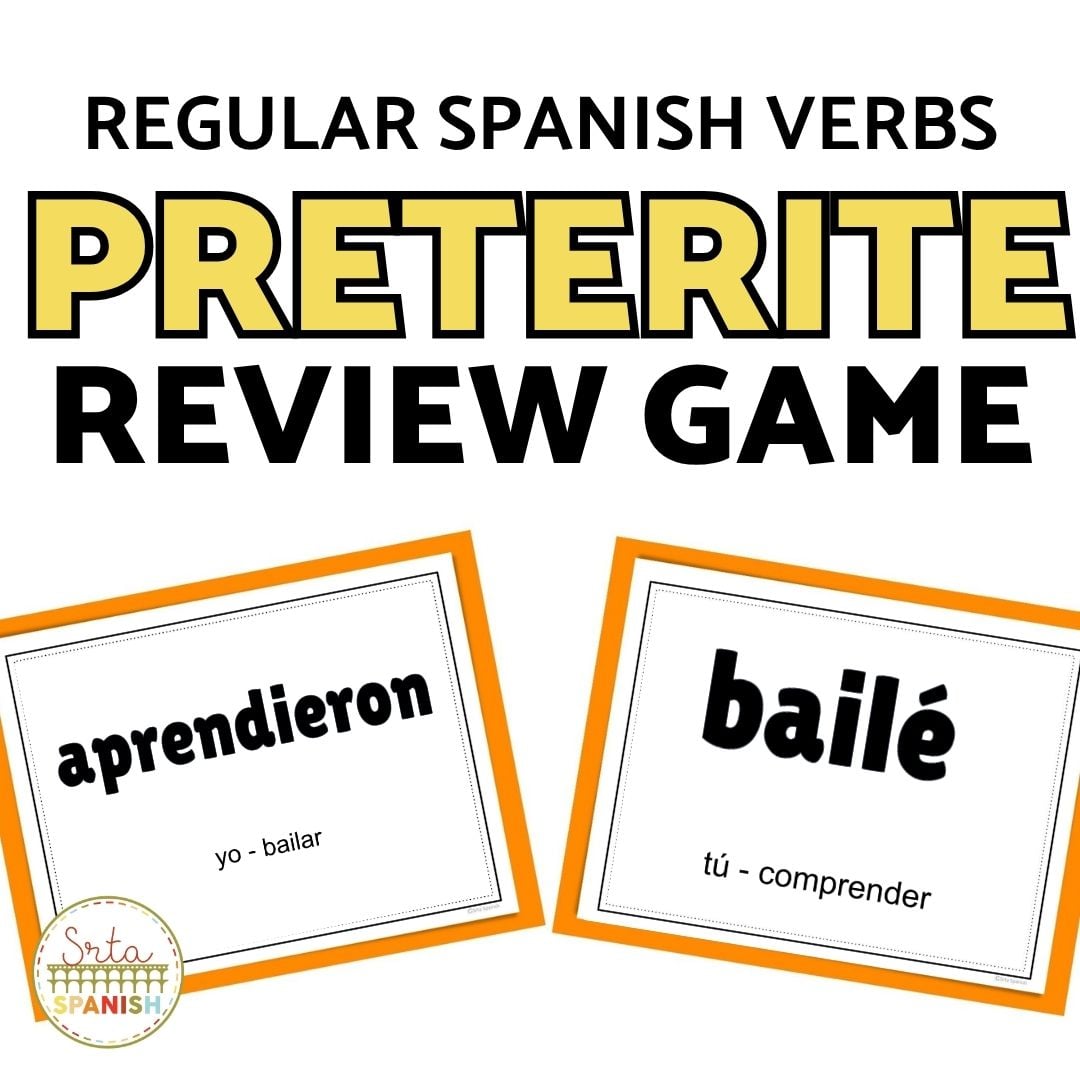
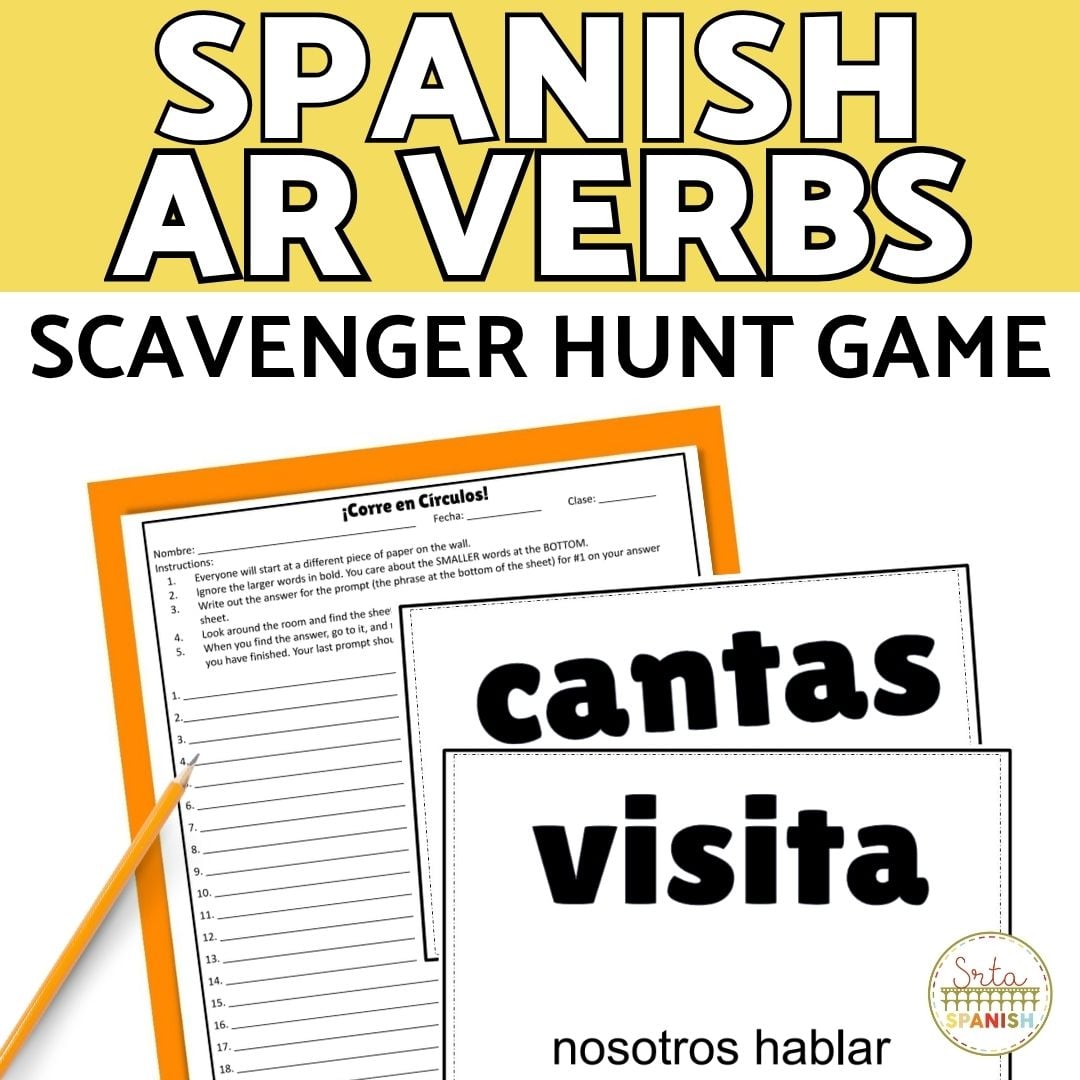
Hispanic Heritage Month, celebrated from September 15 to October 15, is the perfect time to make culture jump off the page and come alive in your Spanish classroom! With over 20 Spanish-speaking countries to explore, students can dive into vibrant histories, rich traditions, and inspiring figures who have shaped the world. And what better way to celebrate Hispanic/Latino Heritage Month than with a Gallery Walk? These Gallery Walks are a great way to get your students up and moving, give them input, and can be wonderfully low-energy for the teacher. Gallery walks can go by many names, but generally it refers to the practice of hanging materials around the room and having students walk from place to place to access the material – like they’re in an art gallery! I try to incorporate at least one gallery walk in every chapter because I love the “rest” day, and the students love the chance to get up, move around, and work at their own pace!

Benefits:
- Encourages movement in the lesson – great for kinesthetic learners
- Great for introduction, practice, and review aspects of a unit
- Can be teacher-created, student-created, or centered around authentic resources
- Low-energy for the teacher, high-interest for students
- Spanish Students can work in pairs or small groups, fostering discussion and peer learning.
- Perfect for integrating real-world content, like Hispanic Heritage Month activities, to connect language with cultural context.
Materials for a Gallery Walk:
What kind of materials work for creating a gallery walk? There are tons of options, so let’s look at different items and prompts you could use to create a gallery walk for your students!
- Infographics – students read and look for different chunks of language or vocabulary. You could also just have them record words they recognize from each infographic!
- Images – Write a sentence describing the image, create a command to go with the image, you name it!
- Readings – Students look for specific pieces of information in each selection
- Student Presentations -live, set up on individual devices for students to click through on their own, or posters around the room

Why Hispanic Heroes Deserve the Spotlight in Your Spanish Class
Hispanic Heritage Month is the perfect time to make history come alive in your classroom. It’s not just about memorizing names. It’s about connecting students to real people who have shaped the world through their resilience, creativity, and leadership. And the best part? You don’t need to reinvent the wheel to make this happen!
This walk is an easy, high-impact way to introduce students to influential Hispanic figures. Hang up infographics, images, short readings, or even student-created presentations and let them move from station to station. Absorbing history in a way that sticks. This method gets them up, engaged, and thinking critically all while reinforcing the idea that language learning is deeply tied to culture.
So why not turn Hispanic Heritage Month into an interactive student-led experience? With the right setup, you can spark meaningful conversations, deepen cultural appreciation, and give students a chance to see themselves reflected in the stories of these incredible figures all with minimal prep on your end. Let’s make it happen
How to Set Up a Successful Gallery Walk:
Spread the material around the room. Either tape things to the wall, or set them on desks that are set apart. If you have access to it, sometimes it’s fun to make this a change of scenery! Tape things up in the hallway, down in the cafetería, or in a large student area! If you have same-level colleagues it can be really fun to combine classes and take everyone down to a larger area all at once. You can also do these outside in those spring months when everyone’s getting the sunshine itch!
In order for the activity to be successful, it needs to have structure. Provide students with a graphic organizer or a set of questions to go with the materials to help guide their focus. Students use the activity sheet or graphic organizer while they walk around reading and completing the activities.

If students need more structure, you as a Spanish teacher can set up timed rotations at each item, split them up into individuals, pairs, or small groups, and have a timer playing on your screen or phone. This helps them pace themselves at each item, and can also help you separate students who may have a hard time once they’re given the freedom to move around.
Have a fast finisher or sponge activity ready for students who finish more quickly than others. As students finish, have them sit and work on that secondary assignment. I generally plan for a gallery walk to take around 30-40 minutes, depending on their skill levels and how new the vocab is for them.
Action!
One of the beautiful things about gallery walks is that once you’ve found or created the materials for a gallery walk, there’s not a lot more for you to do! Float, check in on students, answer questions…or you know, you could sit for a second and take care of a little grading. This time also lends itself really well to small conferences and check-ins with your students!
Want an Example?
Liking this idea, but still not quite sure how it works? Fill out the form below to get a free gallery walk to try out!
The readings include vocabulary supports at the bottom of the page to help your students be successful. Each reading is a basic description of each person’s life, their interests, and what they are known for!
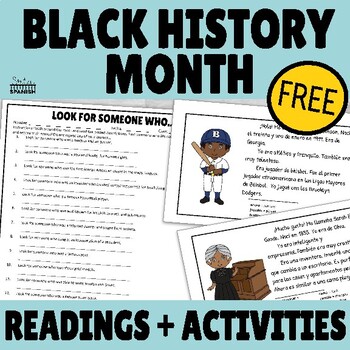
This resource includes a scavenger hunt activity in English, perfect to use for a Gallery Walk activity! Hang the readings around the room, make copies of the scavenger hunt, and you are good to go! The example is also included in my larger bundle of Gallery Walks, which you can purchase here.
Your Turn!
How do you use gallery walks in your classroom? Any tips or tricks to share? Drop them below or come find me on Instagram to connect!
Check out more reading activities for your classroom!


-
El Día de los Muertos Activities Day of the Dead Escape Room Spanish Lesson Plan
$4.25 Add to cart -
Sale!
Día de los Muertos Activities for Exploring Day of the Dead
Original price was: $12.59.$8.12Current price is: $8.12. Add to cart -
Día de los Muertos Day of the Dead Digital Activities in English
$3.75 Add to cart -
La Familia Spanish Family Tree Vocabulary Activity Reading Comprehension Passage
$5.25 Add to cart