Did you catch my “One wish” post on Instagram? I asked if you could have a fairy godmother fulfill one teaching wish, which would you pick. The overwhelming response? Grading. You’d have a fairy godmother do all of your grading for you! It actually kind of shocked me. I was all about the $500/year classroom fund option, to be honest! Anyhow, I thought I’d share some of my tips on how to make grading more manageable!
| 1. Do not grade everything. DO NOT. Don’t do it. Giving them feedback doesn’t improve their language skills and it sucks your time right out of your preps. Choose wisely what actually matters to grade and is accurately measuring their proficiency. 2. Completion grades – Did they do it? All of it? Check. Done. Not done? No check. Moving on. 3. Autograding resources – I love Google Forms, Edpuzzle, Quizizz, Boom Cards, and Señor Wooly for many reasons, but one of them is definitely that I don’t have to grade them by hand, and those I do are fast to grade. 4. Entrance/Exit tickets – An assessment does not have to be 100 questions long to get an accurate measure of the student’s ability. Check out my post here for some more ideas! 5. Split them up or spread them out – Try and space out your big assessments among your levels, or split them up into a few smaller assessments given throughout your unit. |
| I’ll be the first to tell you, I still get overwhelmed by grading sometimes, but those tips have helped me keep it under control and manage the stacks of papers. |
Use Student Self-Checks to Cut Down the Stack
One sneaky trick that has seriously helped me is having students check their own work. Not every time, not for every assignment, but when it fits, it works like magic. Give them a quick answer key after they finish an activity and let them go back and check themselves. You can have them use a different color to correct or reflect, and then just spot-check a few.
This works especially well with vocabulary practice, matching activities, or short grammar exercises. Not only does it take grading off your plate, but students actually learn from seeing their own mistakes and fixing them. You’re still holding them accountable, but in a way that builds ownership instead of just adding to your grading pile.
Make Friends with Autograded Tools
If you’re wondering how to make grading more manageable, here’s one word for you that is “automation”. Tools like Google Forms, Boom Cards, Quizizz, and Edpuzzle are absolute lifesavers. You set it up once, assign it to your students, and let the magic happen while you focus on, well, anything else.
The trick is using these tools with intention. Toss a Boom Card set into your Monday routine for a vocab check or slide in a Google Form after a reading activity. You’ll still get meaningful data, but without the stack of papers staring at you all week.
When you build these kinds of tools into your teaching flow, you’ll notice grading becomes way less overwhelming. You’ll have more energy to actually teach and connect with your students and way fewer Sunday nights buried in rubrics.
So if you’re still figuring out how to make grading more manageable without losing your mind, start small, get creative, and give yourself permission to work smarter. Your future self will thank you.
Final Thoughts
Look, grading is never going to be your favorite part of teaching. I get it. But it really doesn’t have to take over your nights and weekends either. Once you find your rhythm with what to grade, what to skip, and which tools do the heavy lifting for you, everything feels way more doable.
If you’ve been wondering how to make grading more manageable without losing your mind or your Sunday afternoon, try one or two of these ideas and see what sticks.
And if you’ve got your own magic grading trick that saves your sanity? I want to hear it. Drop it in the comments and let’s keep helping each other out. We’re all in this together.


-
Sale!

Spanish Cognates Lesson Plans 1st Day of Spanish Class & First Week of School
Original price was: $22.11.$14.49Current price is: $14.49. Add to cart -
Sale!

Back to School BUNDLE
Original price was: $19.30.$15.65Current price is: $15.65. Add to cart -
Sale!
Back to School Spanish Starter Pack
Original price was: $8.45.$5.59Current price is: $5.59. Add to cart -
Sale!
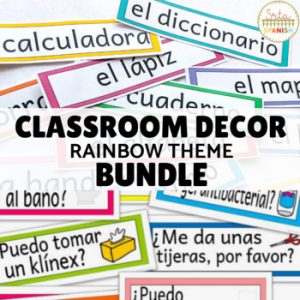
RAINBOW Classroom Decor BUNDLE
Original price was: $18.41.$12.45Current price is: $12.45. Add to cart