Looking for creative ways to boost your Spanish Demonstrative Adjectives Practice without boring your students to tears? You are in the right place. If you teach your Spanish classes with a textbook, I’m sure you have a chapter where you’re supposed to cover demonstrative adjectives! It can be tricky at first to come up with communicative ways to teach this vocabulary, but I have a few ideas here for you to do 3 days of lessons. Learn more about these demonstrative adjectives in Spanish practice activities!
Introducing Demonstrative Adjectives in Spanish
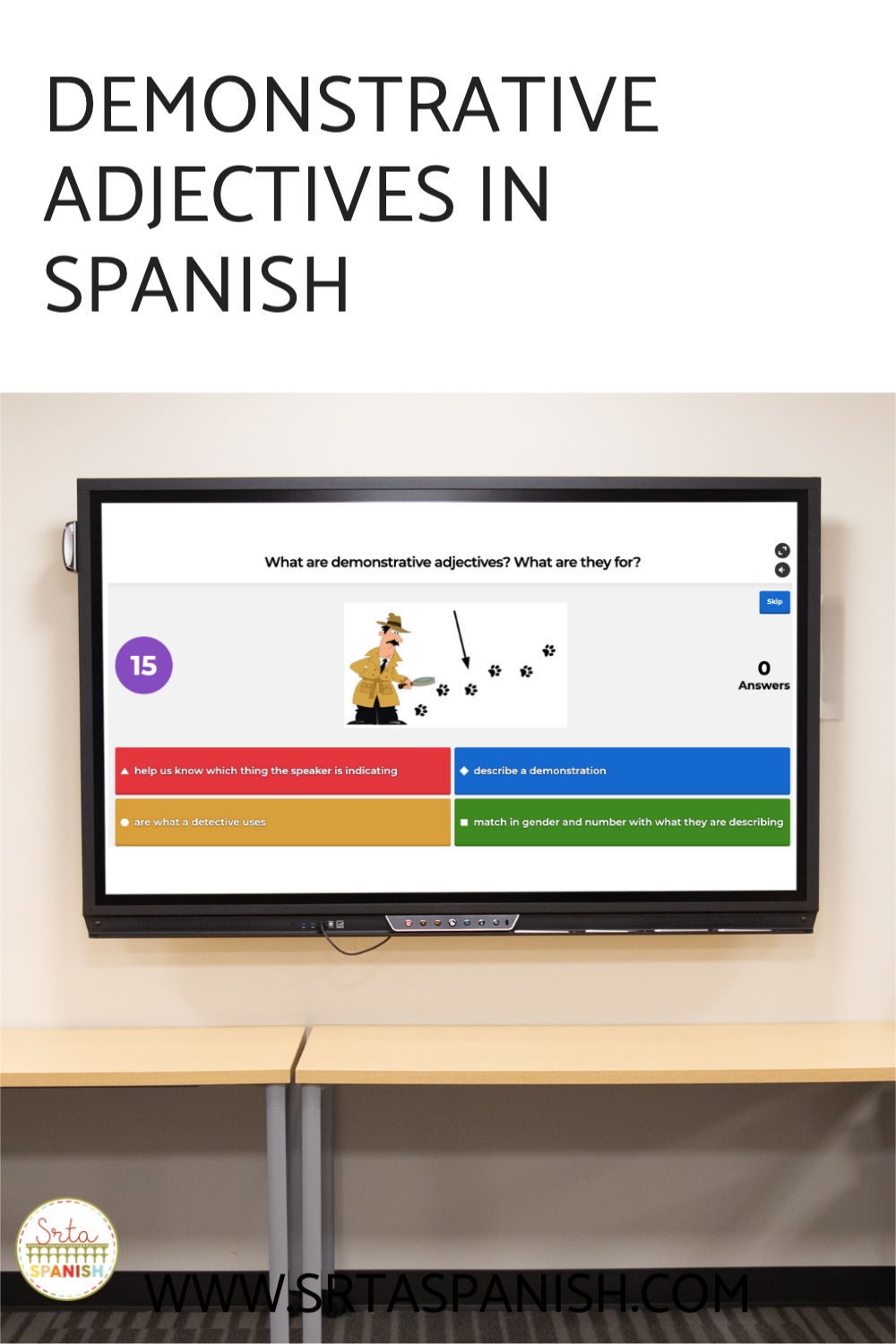
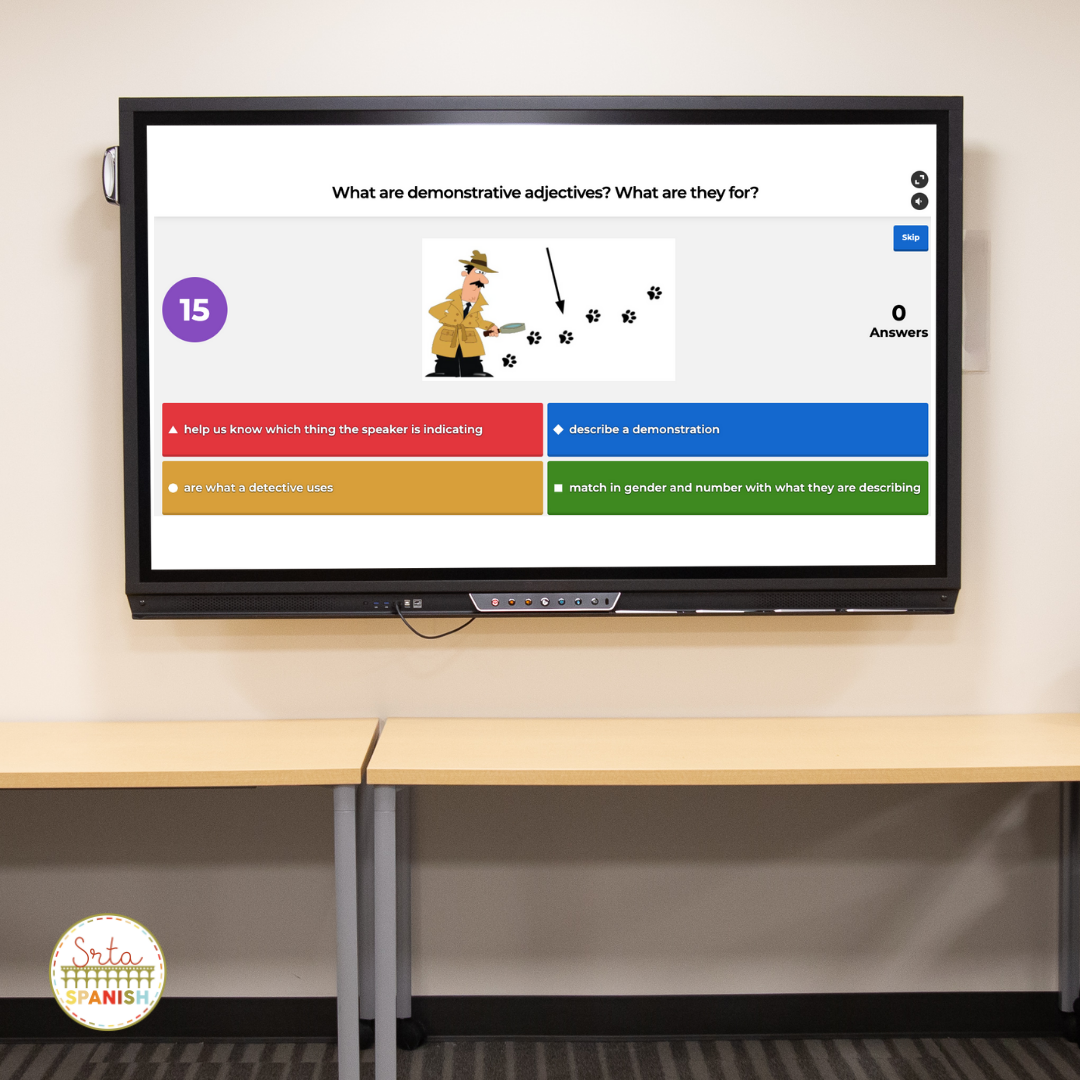
Demonstrative adjectives are one of the skills I like to introduce with a Blind Kahoot! Kahoot itself has a lot of great resources explaining the methodology behind doing a Blind Kahoot, but in general, remember to explain to students that it isn’t like a regular Kahoot- not all of the questions will be for points, it isn’t stuff you already know, and the majority is stuff you’ll have to pick up on as the class goes through things.
Make sure that you pause and check for understanding at the built in spots within the Kahoot- most students have figured things out before then, but it’s nice to regroup and make sure everyone is on the same page. Take as much or as little time as you need with your students. Remember, this is replacing direct instruction on the topic so checking for understanding is important.
After your class finishes the Kahoot, distribute the Dibujos sheet. This is a reverse of what they have done in the Kahoot- instead of looking at a picture and matching the sentences they are now interpreting the sentence and creating the illustration. This handout will serve as their “notes” from the lesson for the day.
Demonstrative Adjectives in Spanish Practice
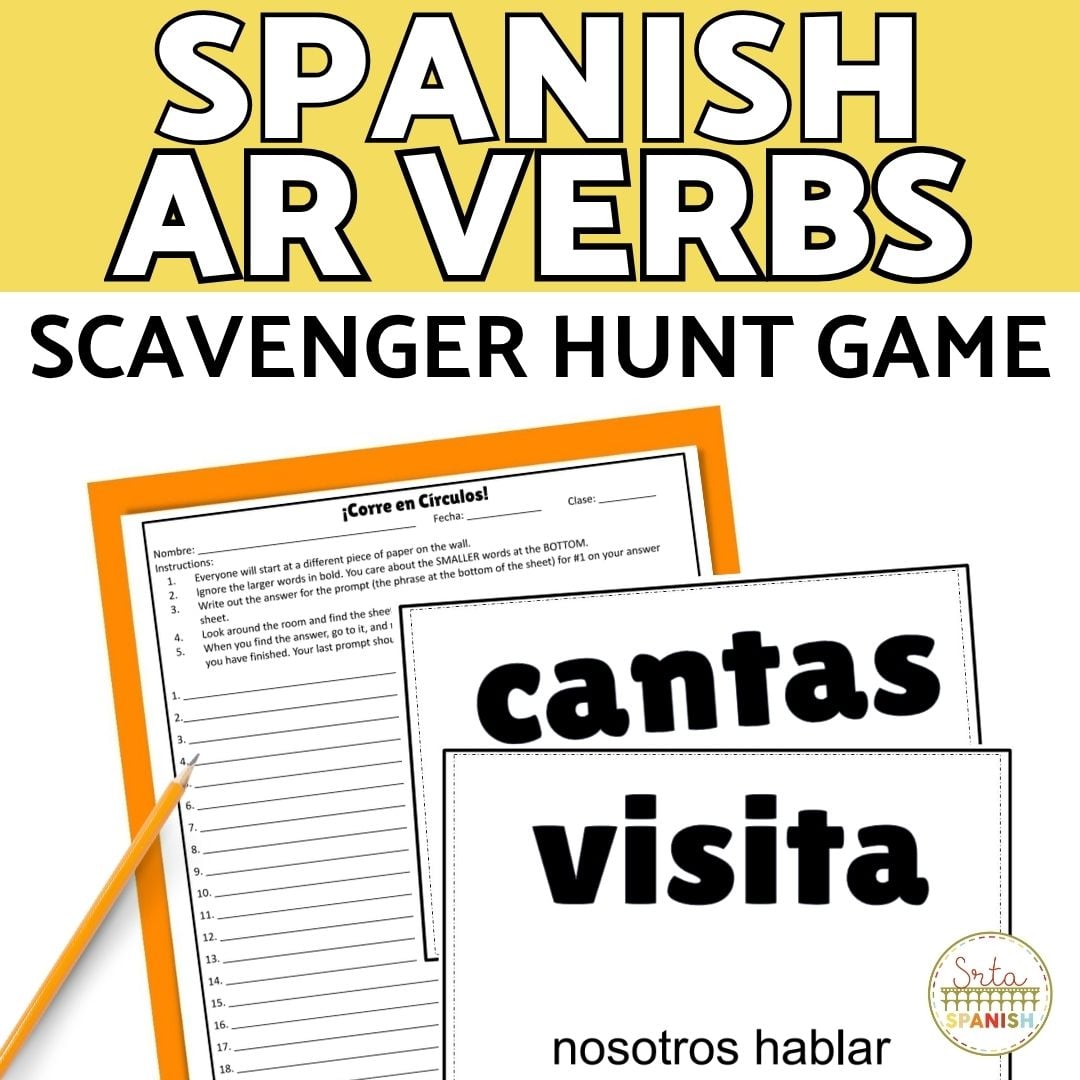
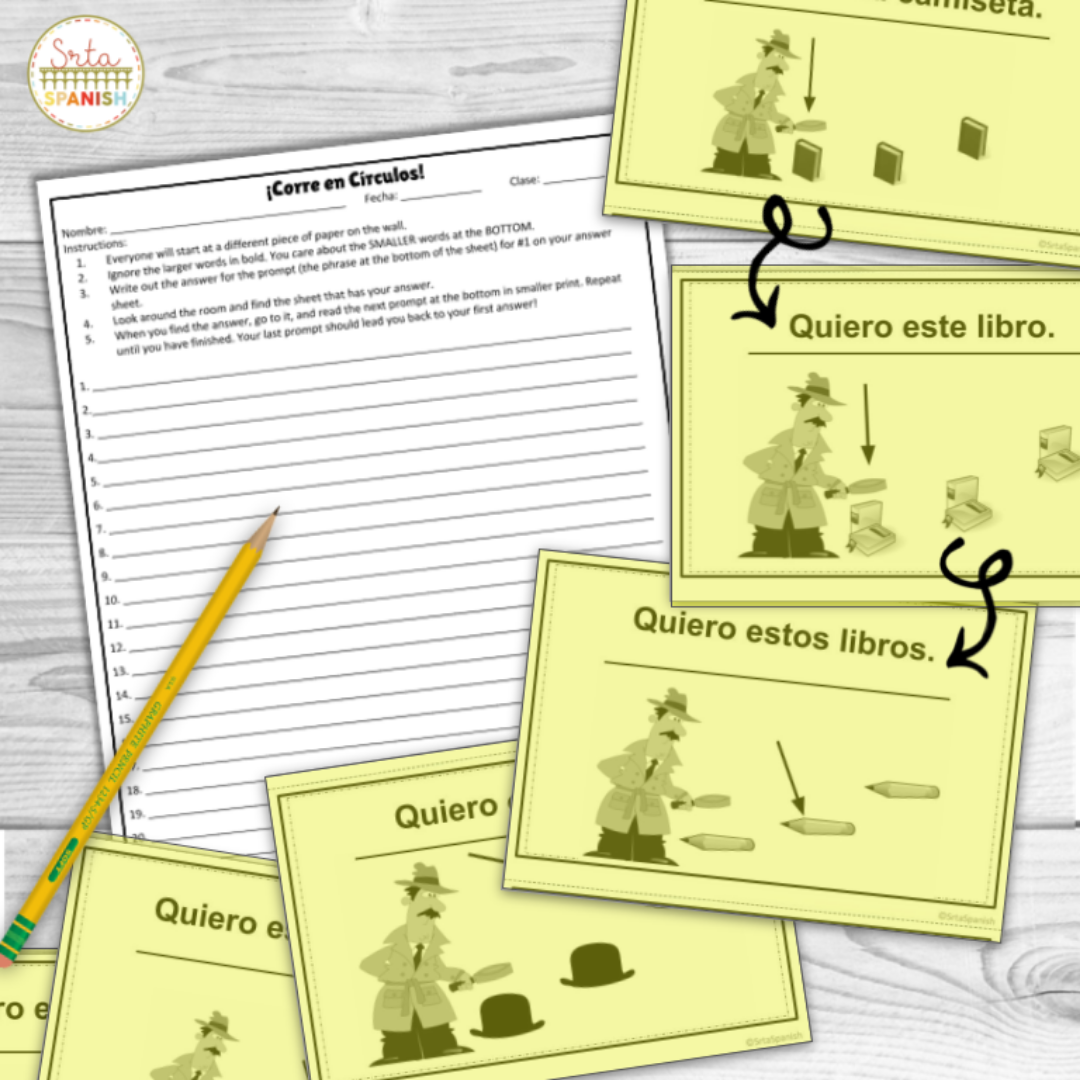
¡Corre en Círculos! Demonstrative Adjectives
The following day, I often do a warm up activity with the demonstrative adjectives. I tell them the rhyme to help remember and we repeat it together. Then, check for understanding with the Dibujos sheet. Sometimes during the warm-up I’ll ask if anyone is particularly proud of a drawing- you could share it via document camera, hang it on a bulletin board, or just snap a pic to share in an online LMS. Finally, I introduce the scavenger hunt activity ¡Corre en Círculos! Demonstrative Adjectives.
At the end of the second lesson, I will often do an exit slip to check for understanding.
Escucha, Escribe, Dibuja Demonstrative Adjectives Activity
On the third day of working with demonstrative adjectives, I like to do a Listen, Write, Draw activity. You can either read the script, play the recording, or post the recording for your students in a learning management system such as Google Classroom. Students listen, write what they hear, then illustrate the sentences.

Make It Visual with a Mini Museum Walk
If you are looking for a fresh way to make Spanish Demonstrative Adjectives Practice more interactive, try turning your classroom into a mini museum. Set up stations with real objects or images around the room, each labeled with a letter or number. Then give students a chart of sentence frames. As they move around the room, they write sentences describing the items using demonstrative adjectives. Think along the lines of Este sombrero es elegante or Aquellas fotos son muy graciosas.
It sounds simple, but it gets students thinking critically and applying the grammar in a real context. You can even throw in a few silly or unexpected objects to keep the energy up. This works especially well in pairs or small groups and gives you an easy opportunity to check for understanding as they rotate.
Add Speaking with a Partner Guessing Game
Another great way to build in Spanish Demonstrative Adjectives Practice is through quick speaking challenges. After students have some reading and writing experience with the adjectives, give them a stack of object cards or pictures and set them up with a partner.
One student chooses an item and gives clues using demonstrative adjectives. For example, Este animal es muy rápido y vive en África. Their partner has to guess the object. Then they switch roles. You can make it more fun by using realia, classroom objects, or themed vocab sets like food, clothing, or school supplies.
This works well because it keeps the grammar in context and gives students confidence speaking in complete sentences. Keep it low pressure and focused on communication, not perfection.
Additional Demonstrative Adjectives in Spanish Practice:
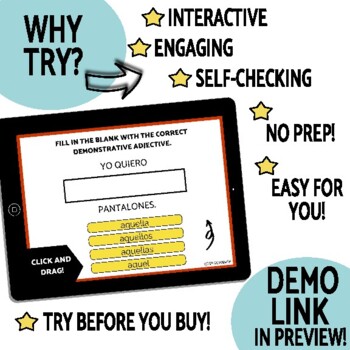
If your students need some additional practice, Boom Cards are a great option! Boom Cards are digital, self-checking task cards hosted on Boom Learning. Click here to try out this resource in a short sample!
Want to grab 3 days of lessons and activities ready for you?
Click the link below to grab the bundle and save 20% on the activities described here!

Demonstrative Adjectives in Spanish BUNDLE
Give your students lots of practice with demonstrative adjectives! Students learn and practice demonstrative adjectives using lots and lots of visuals!
– 9 MB – Zip
Original price was: $10.90.$8.25Current price is: $8.25.


-
El Día de los Muertos Activities Day of the Dead Escape Room Spanish Lesson Plan
$4.25 Add to cart -
Sale!
Día de los Muertos Activities for Exploring Day of the Dead
Original price was: $12.59.$8.12Current price is: $8.12. Add to cart -

Día de los Muertos Day of the Dead Digital Activities in English
$3.75 Add to cart -
La Familia Spanish Family Tree Vocabulary Activity Reading Comprehension Passage
$5.25 Add to cart