Making sure our students nail down preterite vs imperfect is one of the focuses of Spanish class. And if you are on the lookout for some great Preterite vs Imperfect Spanish practice activities – you’ll definitely want to read on. This blog post will share some great reviews, practices, ideas and other activities you can do with middle and high school students!
In a hurry? Grab the bundle of preterite vs imperfect activities here!
Watch the Video
Preterite vs Imperfect Practice Activities
One of the things I usually start with is a quick review of both the preterite and the imperfect tenses. We learn the two separately during first semester, so we touch base on them before we really get into the two tenses together!
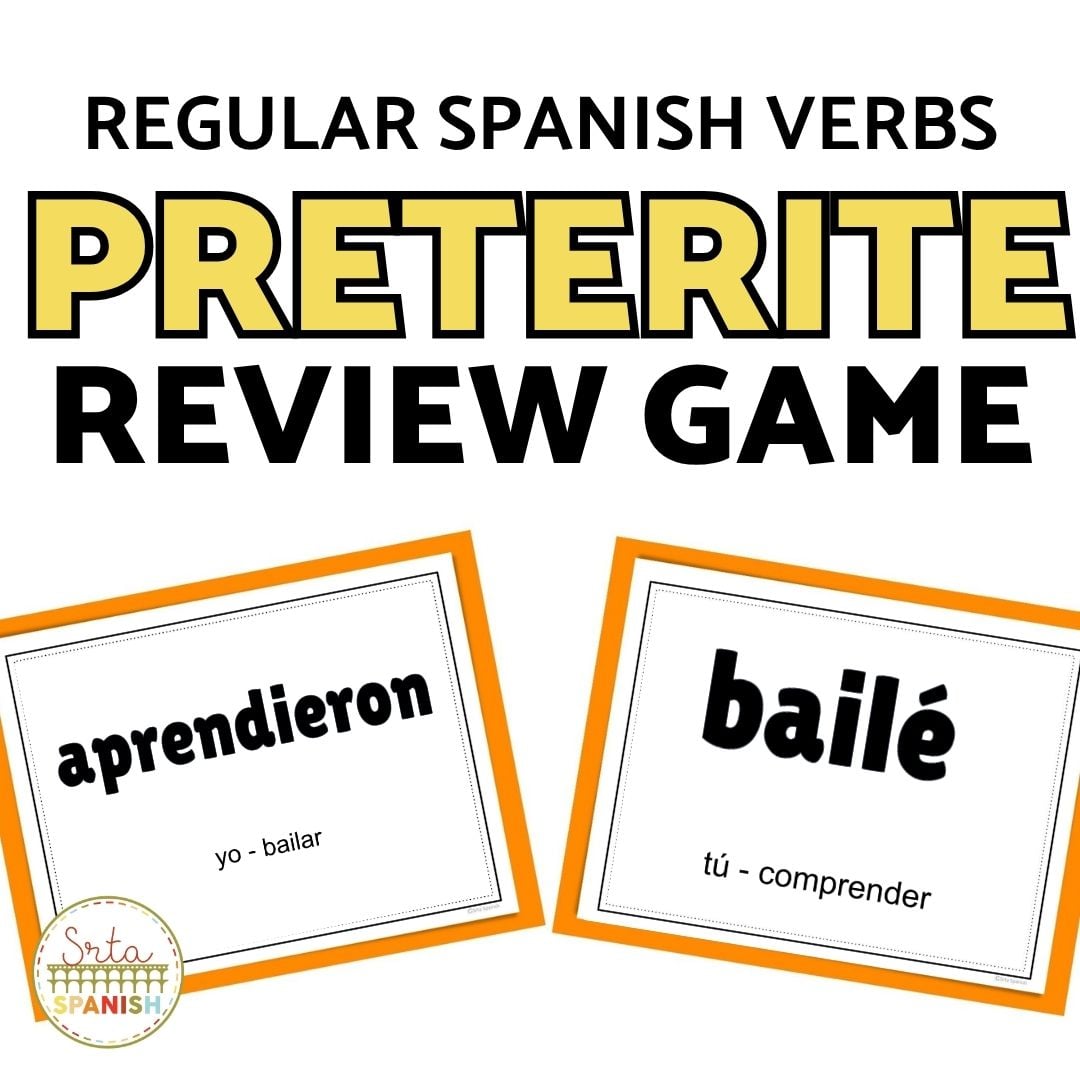
Sometimes we play a quick round of El Toro or Cucharas as review. It’s always been one of my students’ favorite games to play! If we’re running low on time we’ll just play a round or two of the Preterite vs Imperfect deck at the end of class!
Towards the beginning of the unit, we’ll play with this set of scrambled sentences, but the easier version. The easier version helps them focus on word order and figuring out when to use each of the tenses. We’ll come back to the set at the end of the unit and give them all of the options so they not only have to put the sentence in order, but also choose which tense to use for each verb. Extra tricky!
Review Activities
Sometimes when you’ve been working with the preterite and imperfect for awhile, you can start to feel as if you’ve tried everything! This is when I break out the review activities.
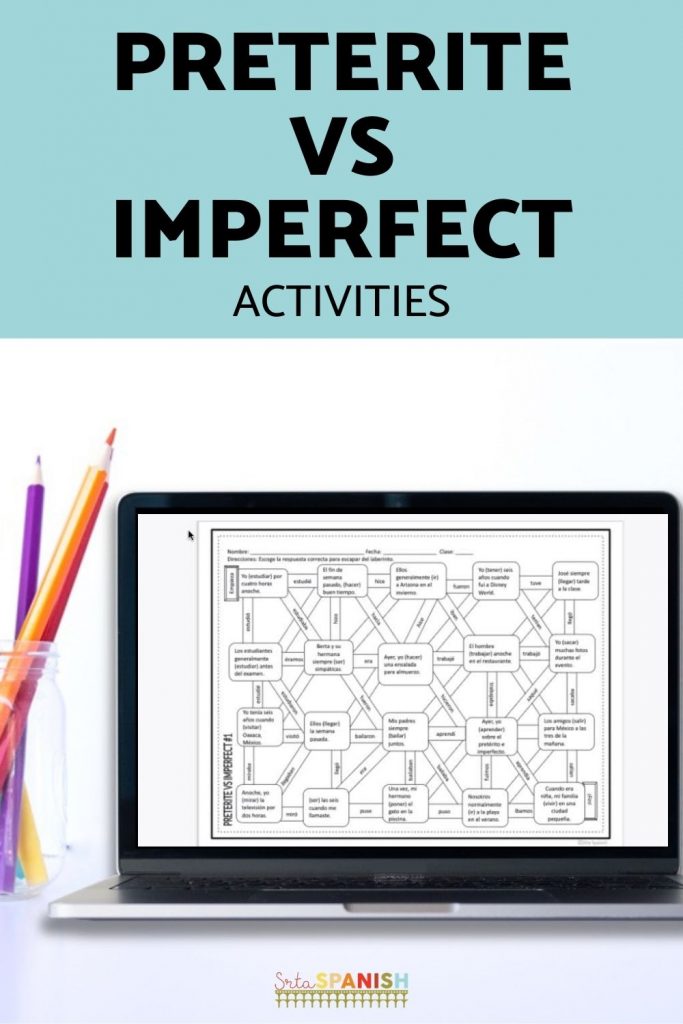
Maze games are a great, almost sneaky way, to get students to do more reading and practice! Students read the prompt and choose the correct answer to “escape” the maze. I also have my students go back and do additional activities with the mazes for extra practice!
Check out my post here on 10 Ways to Use Maze Games in Spanish Class!
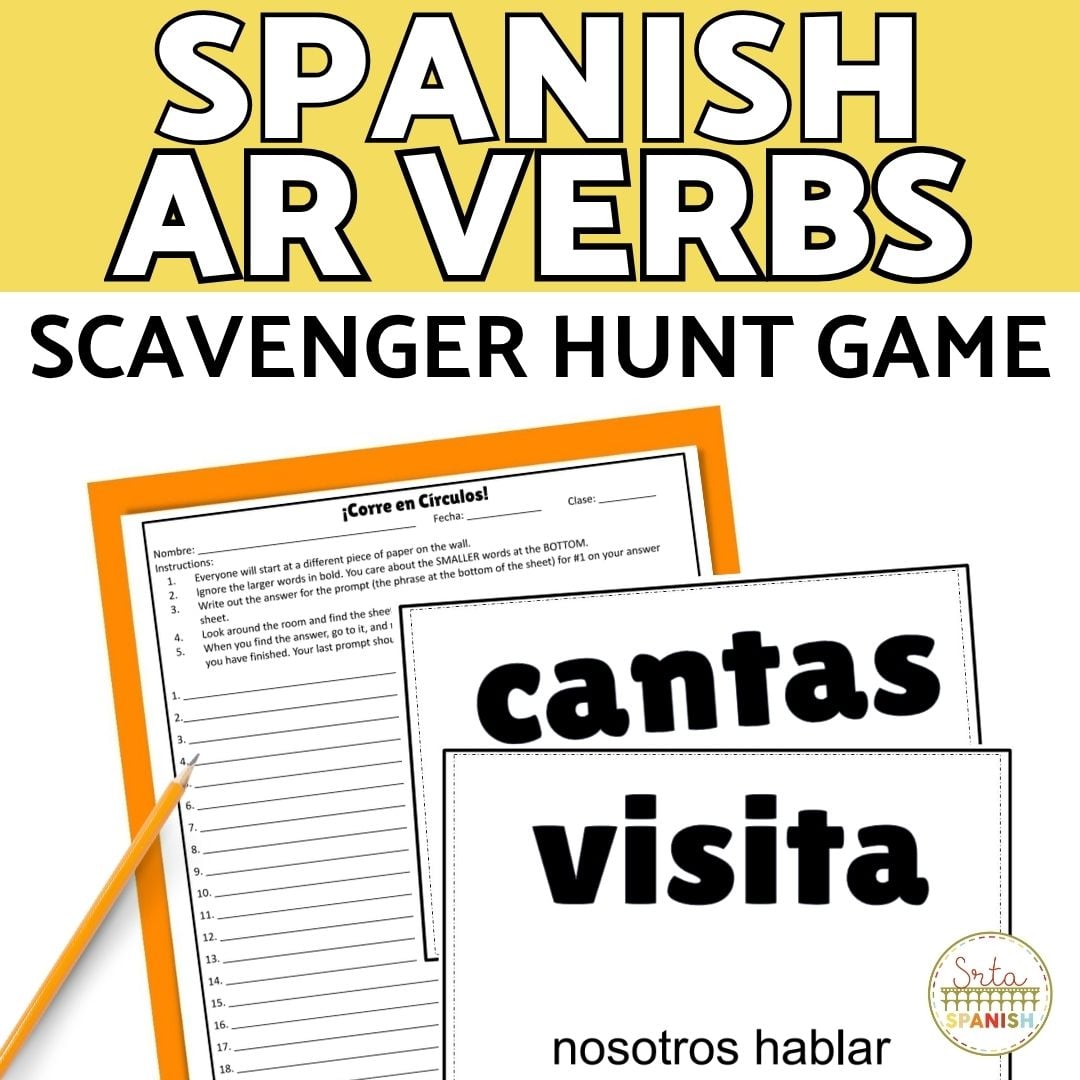
¡Corre en Círculos! is my absolute favorite way to get students to practice a concept while getting them up and out of their seats. My resource for preterite vs imperfect includes two different ways to practice- one where students are given the infinitive and must decide preterite or imperfect and conjugate it, and one where they are given both conjugated verbs and must choose preterite or imperfect.
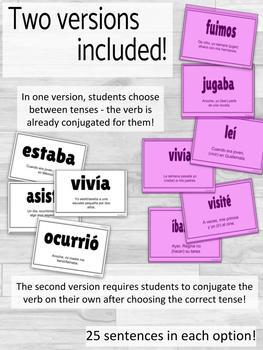
Each year is a little different, but I have used them in a variety of ways! I’ll print in different colors for differentiation, use one as an extension of the other, or do the two activities on two different days! I’ll even print them as mini-versions to make a fast finisher puzzle. Click here to see my post on variations for this activity!
Last, but not least, you know how much I love Boom Cards for students! In this case, I especially love that the students get instant feedback to help them know how they’re doing. Why don’t you try a few for yourself? Click here to demo the set!
Preterite vs Imperfect Spanish Practice Activities
Check out the bundle and yourself time with six ways to practice preterite vs imperfect in your Spanish classes! Several options for you to choose from as you reinforce this concept with your students!
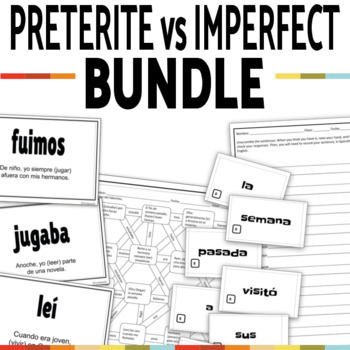
Preterite vs Imperfect Spanish Interactive Storytelling
One of the most effective ways to help students grasp the difference between preterite and imperfect tenses is through storytelling. Start by crafting a simple story outline that includes both completed actions and ongoing past activities. For instance:
“Yesterday, I went to the park. It was sunny, and children were playing. Suddenly, it started to rain.”
In this narrative, “went” and “started” are in the preterite tense, indicating completed actions, while “was” and “were playing” are in the imperfect, describing ongoing conditions or repeated actions.
Encourage students to create their own short stories, incorporating both tenses. They can share these stories in pairs or small groups, fostering peer learning and discussion. This activity not only reinforces grammar but also boosts creativity and speaking skills.
Practicing Tenses in Context
Role-playing offers students a chance to practice tenses in real-life contexts. Set up scenarios such as:
- A detective interviewing witnesses about a past event.
- Friends reminiscing about a childhood memory.
- A news reporter describing an incident.
Assign roles and provide prompts to guide the conversations. For example, in the detective scenario, the detective might ask, “What were you doing when the event occurred?” prompting the use of the imperfect, while the witness responds with specific actions in the preterite.
This interactive approach allows students to apply grammar rules dynamically, enhancing their understanding and retention.
Visual Timelines
Visual aids can significantly aid comprehension. Have students create timelines of their day or a fictional event, marking actions that happened once (preterite) and those that were ongoing or habitual (imperfect). For example:
- 8:00 AM: Ate breakfast (preterite)
- 8:30 AM – 9:00 AM: Was studying (imperfect)
This visual representation helps students distinguish between the tenses and understand their appropriate usage in context.


-
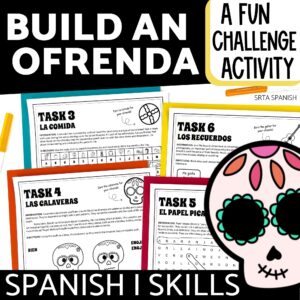
El Día de los Muertos Activities Day of the Dead Escape Room Spanish Lesson Plan
$4.25 Add to cart -
Sale!
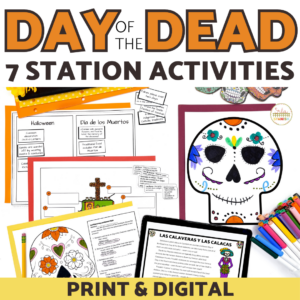
Día de los Muertos Activities for Exploring Day of the Dead
Original price was: $12.59.$8.12Current price is: $8.12. Add to cart -
Día de los Muertos Day of the Dead Digital Activities in English
$3.75 Add to cart -
La Familia Spanish Family Tree Vocabulary Activity Reading Comprehension Passage
$5.25 Add to cart