If your Spanish students are working on their language skills, Spanish listening skills are an important part of that! Using video clips and different Spanish audio files gives students the chance to hear different accents, new vocabulary, and the beautiful variety from Spanish-speaking countries across the world. Regional variations can be tricky for language learning, so let’s talk about some Spanish listening practice options for your Spanish learners!
Watch the Video
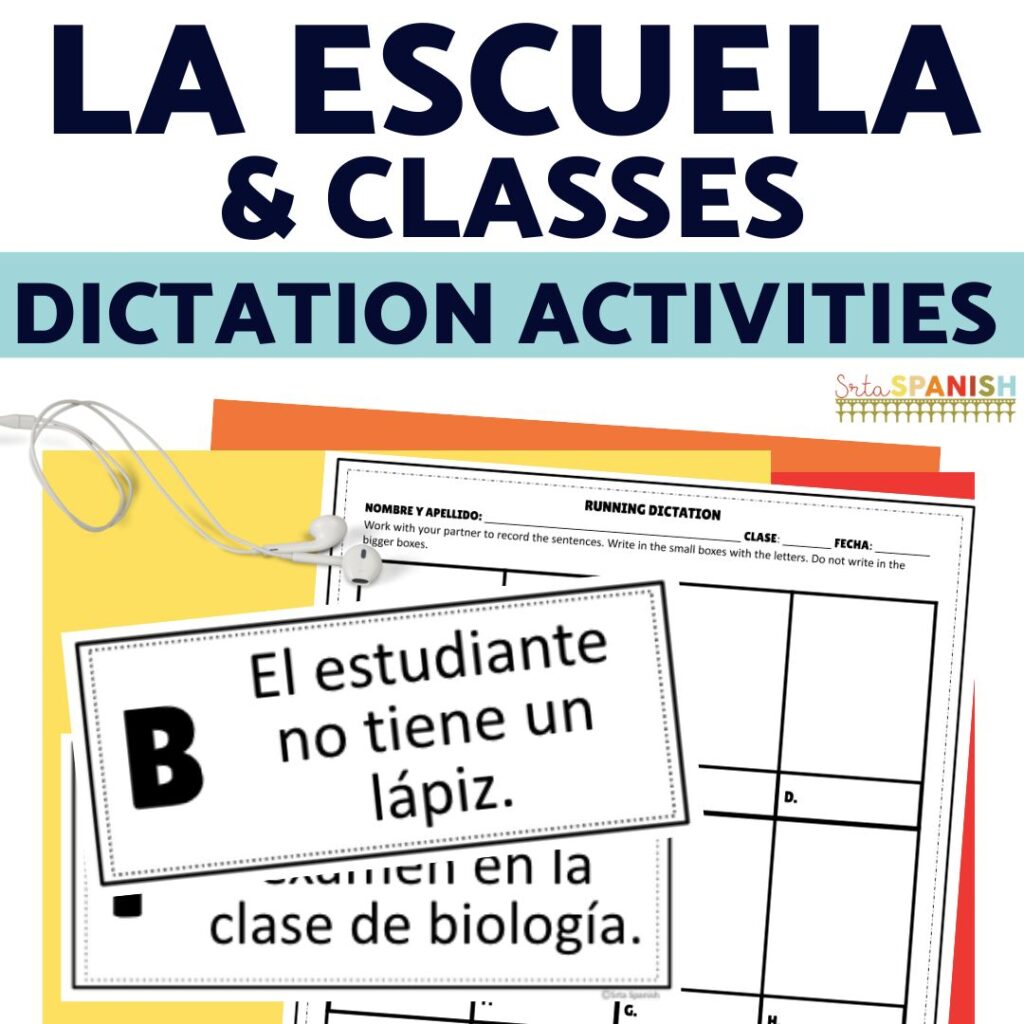
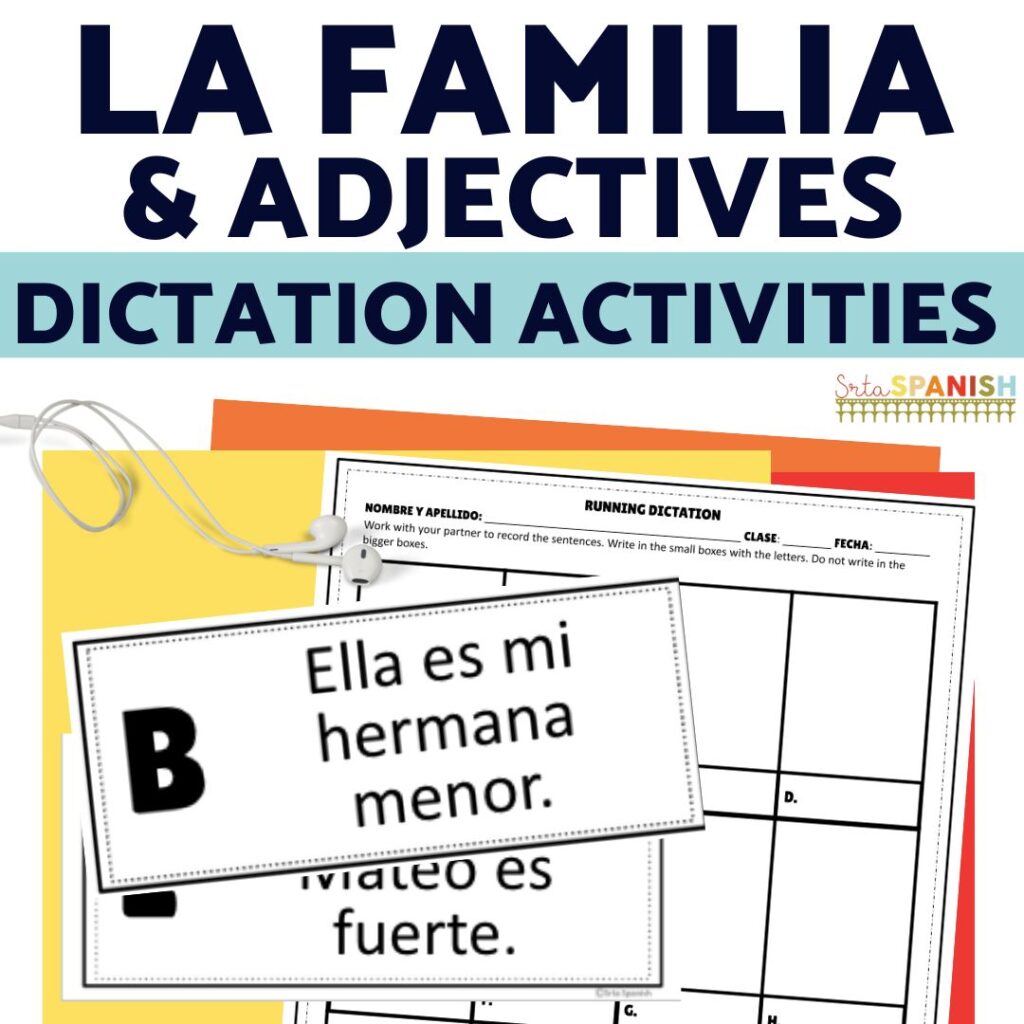
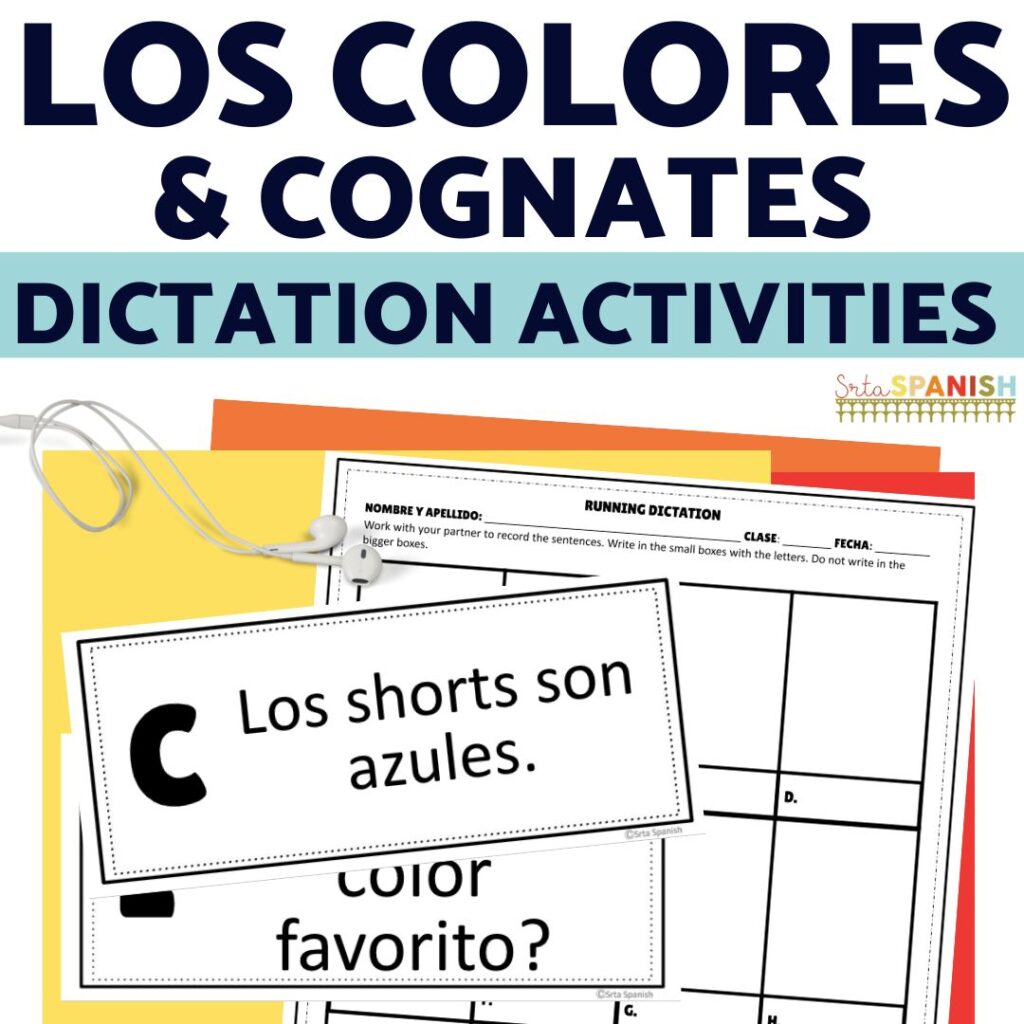
If you’re looking for Spanish listening exercises with audio to go with your units to save you time, check out these pre-made sets I have for you!
Spanish Podcasts
If you are looking for Spanish podcasts for your students, you’ll love my blog post here! It includes 24 of the best Spanish podcasts for Spanish learners to more advanced students, with Spanish speakers from different regions in the Spanish-speaking world. Podcasts often feature native speakers, perfect for comprehension skills with authentic pronunciation, vocabulary, and conversational patterns of the Spanish language.
This list of Spanish podcasts includes the best resources broken down by skill levels so you can find online resources for beginner to advanced learner levels. There are a variety of accents and countries included in the list!
Spanish Music
Music is a great way to include Spanish listening practice in your classroom! There are tons of great artists out there so you’re sure to find musical styles all of your Spanish learners will love.
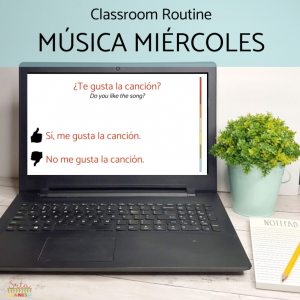
You can do Spanish listening comprehension activities with them, use the music videos for Movie Talk, add them as a daily routine to introduce a Spanish-speaking country and artist, and even more.
Check out these blog posts for ideas on how to include Spanish music in your lesson plans!
Spanish TV Shows
Tv shows are another great option for listening! Allison from Mis Clases Locas has a ton of great resources and blog posts sharing about her favorite Spanish tv shows and movies to use with students. Check them out here!
Social Media and Youtube Videos
I’ve shared in my blog post on authentic resources how wonderful I think social media is for #authres with Spanish students! On Youtube channels you can turn on English subtitles to support Spanish learners. The English translations are auto generated, but they can be a helpful support option for students. You might also download the Spanish transcripts for students to read and follow along!

You can also use Youtube and Edpuzzle to create a video lesson for your students. You can even download shorter clips from Instagram or Tiktok. Check out the tutorial here:
This can be helpful if your school security network blocks those websites and you want to use the content to connect with your students’ everyday life and show them real people using the language or give them a glimpse of Spanish culture.
Listening Activities
Once you have an audio file, it’s great to do some comprehension exercises with it to check for understanding. These might be online listening exercises, or on paper – either way! I personally prefer online listening exercises to have interactive elements with autograding options so students get immediate feedback. Boom Cards are a great option for that! They include short clips for your students to interact with.
Here is my blog post with 30 listening activities you can use with your classes. This is an excellent resource you can use to help you planning your Spanish lessons with plenty of ways to practice.
Creative Ways to Use Spanish Listening Exercises in Your Lessons
If you’ve ever seen your students totally zone out during a textbook audio track, you already know, Spanish listening exercises need to be more than background noise. The magic happens when they are interactive, connected to real language use, and flexible enough to fit into your actual teaching flow.
One of my favorite ways to build variety is by using short audio clips followed by “choose your own adventure” comprehension paths. Give students a short listening clip, then let them pick between different follow-up questions, some focused on vocabulary, others on cultural context, and a few open-ended ones that let them use their imagination. This small shift adds voice and choice to your listening activities while still keeping the language goals in sight.
You can also do peer listening stations. Have your students create short recordings of themselves reading a passage, asking and answering questions, or even describing a scene. Then rotate those clips through the class as listening practice. It’s a sneaky way to review vocabulary, pronunciation, and build confidence without extra prep on your part.
Spanish Listening Practice
Dictation activities are some of my favorite options for regular practice with students’ listening skills. Let’s look at 3 variations of dictation you can uses in your Spanish classes!
Classic Dictation
Dictation in Spanish class is a great way to practice listening comprehension and writing skills. You can choose to place an emphasis on spelling if you would like and encourage students to spell as accurately as possible to help them pay close attention to pronunciation.
I personally like to use them as a way to reinforce chunks of language from a reading we have been working with in class to reinforce language acquisition of those pieces of a story. For dictation, I often encourage students to just listen the first time through the sentence, then record it the second or third time through.
Learn more about how to do classic dictation and grab a free handout to use with your students here!

Another great way to do classic dictation in your classes is an activity I call Listen, Write, and Draw. It is exactly what it sounds like! Students listen to the sentence, write what they hear, then draw to show comprehension. I usually choose to do this with pre-recorded audio files. It makes it a great sub plan option, or gives me a little time to conference with students or catch up on grading.
Running Dictation
This is Classic Dictation’s active younger sibling! It’s a slight twist on classic dictation that has your students up and moving. They work in pairs or in groups of three to read a sentence hung on a wall, memorize it, then repeat it out loud to their partner. Their partner listens and records the sentence that they hear from their partner.

Halfway through the activity, they swap with their partner. This is great not only for listening, but also pronunciation practice as their partner is relying on them to communicate clearly so they can be successful. Learn more about how to set up this activity for your classes here!
Reverse Running Dictation

If Running Dictation is Classic Dictation’s sibling, this one is the funky cousin! It’s a twist of the twist – instead of classic, or running, it takes the same language components of listening and reading and puts it more in a front load format. This one works great near the beginning of the unit – too far into it and they will go super fast! Here are the instructions they received:
Instructions: Without showing this sheet to your partner, read the sentence out loud to them. Your partner will go and find the image that illustrates the sentence you read and tell you the letter of the image. Then, you will record the letter, and read the next one! When you get through your sentences, turn in this sheet and your partner will pick up the sheet for Partner B.
Partner B had similar instructions! This is also a great way to reinforce the alphabet in Spanish as they answer with a letter for each image.
Click here to learn more about using this listening and reading activity in your classes!
Make Spanish Listening Exercises Work for All Levels
Whether you teach sixth graders just learning greetings or tenth graders practicing present tense verbs, Spanish listening exercises can meet your students right where they are. Adjust the length, speed, and structure of the activity based on their level, but keep the routine consistent. That way, they build listening stamina over time, without feeling overwhelmed.
The key? Keep it fresh. Mix in music, student voices, native speaker clips, and movement-based options like Running Dictation. Your students will hear more, retain more, and maybe even have fun while doing it.
And that’s the sweet spot we are all aiming for, right?
Spanish Listening Exercises with Audio for Beginners
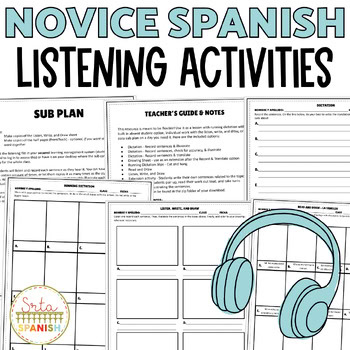
If you’re looking for some activities to go with your units to save you time, check out these pre-made sets I have for you!
List of Topics:
- Los Colores
- Demonstrative Adjectives and Clothing
- Los Deportes
- La Escuela
- La Familia & Adjectives
- Greetings and Farewells Vocabulary
- Gustar and Infinitive Verbs
- La Hora Telling Time in Spanish
- Ir A Infinitive
- Ir and Places
- Present Tense AR Verbs
- La Ropa y los Colores (Winter Theme)
- Ser and Spanish Adjectives Vocabulary
- El Tiempo Weather in Spanish
- Tener Expressions
- Usted Commands
Save this post for later!


-
Sale!

Spanish Cognates Lesson Plans 1st Day of Spanish Class & First Week of School
Original price was: $22.11.$14.49Current price is: $14.49. Add to cart -
Sale!
Back to School BUNDLE
Original price was: $19.30.$15.65Current price is: $15.65. Add to cart -
Sale!
Back to School Spanish Starter Pack
Original price was: $8.45.$5.59Current price is: $5.59. Add to cart -
Sale!
RAINBOW Classroom Decor BUNDLE
Original price was: $18.41.$12.45Current price is: $12.45. Add to cart