

If you have been transitioning to Comprehensible Input (CI) strategies for a little while, you may be beginning to wonder, “Where are the assessments?” You might feel like all the posts and videos you see are about the stories, the brain breaks, and the “fun stuff” like Música Miércoles or Movie Talks. The answer, at least in my case, is that they happen all the time. That’s right. Assessment happens every day. But, you’re a teacher, you know this! Let’s look a little closer at some of these ideas for assessment in a CI classroom.

This post is part of my HOW TO TRANSITION TO CI METHODS series. Check out the other posts here!
- What is CI & where to start?
- Classroom Routines
- Teaching CI with a textbook
- CI Activities for your Classroom
- Assessment in a CI Classroom (this post)
Some of the links in this post are affiliate links. This means if you click on the link and purchase an item, I will receive an affiliate commission at no additional cost to you. Thank you!
Circling
One of the easiest forms of assessment in a CI classroom takes place whenever you’re questioning your students. This happens during Picture Talks, Movie Talks, while you are story telling and at other points throughout the class period. As you’re giving your students that auditory input you are constantly asking questions. Their responses help you gauge where they are in their understanding.
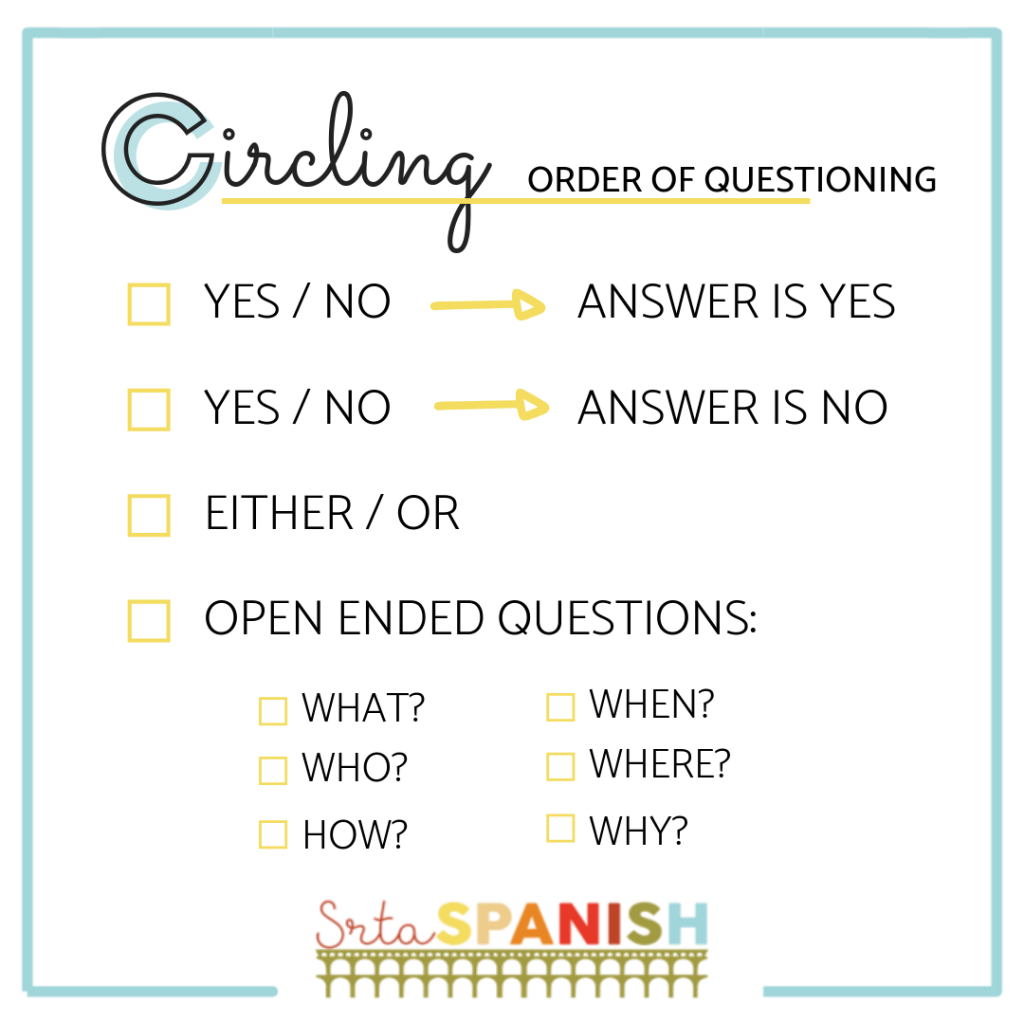
As the questions or the original statements get more complex, you get a better understanding of which students understand, and how they answer gives you more of a glimpse. Whether they give you a simple yes/no, or respond in a complete sentence, you can hear where your students are at. Click here to see my post on How to Circle!
Comprehension Checks or “Quick Quizzes”
Another great way to assess your students is to give them a comprehension check. Tina Hargarden and Ben Slavic refer to these as “quick quizzes” in their book A Natural Approach to the Year. I have always thought of them as exit slips. Whatever you choose to call them, giving your students a mini formative assessment at the end of the class period tells you what your students did or did not understand.

On story telling days, I often plan these exit slips out ahead of time, writing the skeleton of my questions and deciding whether the statement will be true or false ahead of time. I find it easier than making up questions on the spot, although you can certainly do that! It also helps me when I have multiple class periods of the same prep. If I made up questions on the spot, I would also have to remember the answers for grading. Instead, I choose the answers and create the question ahead of time for ease.
You can give these quick quizzes in a few different ways. If you are required to get a certain number of grades recorded per week, it’s easy to use pre-made slips of paper for the students to record their answers. If you prefer, or your admin would like you to use technology, you could apply the same principle to a Google Form.

If your students were already using computers for EdPuzzle, Quizlet Live, or some other online activity, it won’t take much time for them to go to the page and take the assessment. Just choose which option is most fitting for your plan that day and you’re good to go!
Timed Writes
Timed writes are one of my favorite ways to assess my students. This is because it really allows them the opportunity to be creative and strut their language stuff!
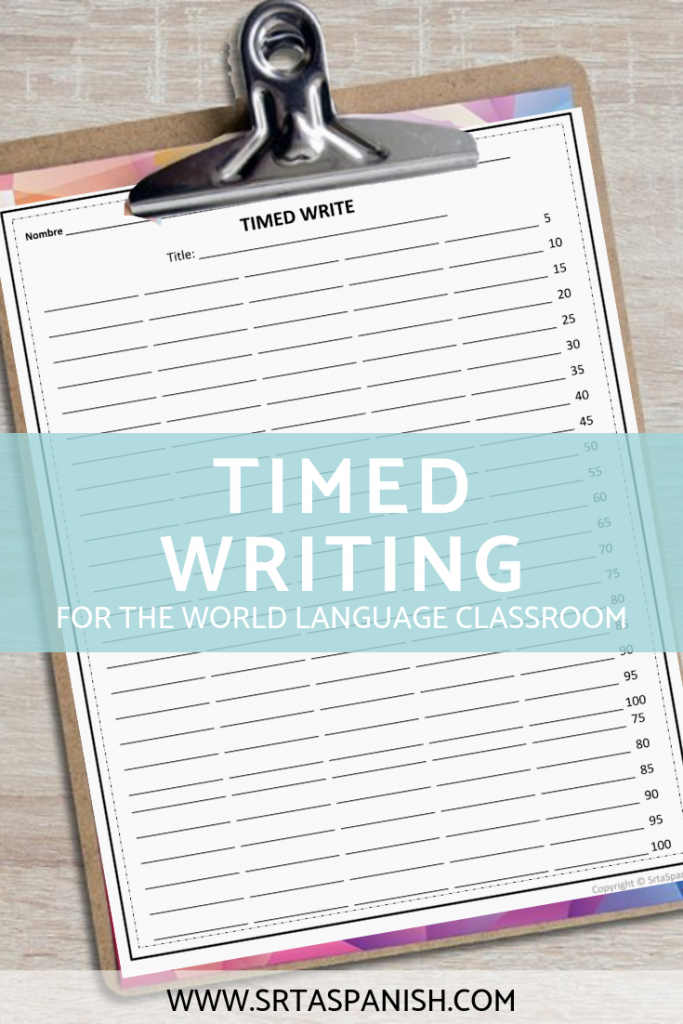
Students have really blown me out of the water with some of the stories they come up with in just 6 minutes of timed writing after a few months in Spanish. It also gives you insight into what structures or sentences students need to see or hear more!
For example, my first timed writing last year gave me the giggles. A LOT of my students were finishing off their stories or dialogue with “asluwego”, or “asta luwaygo” – or some variation of it! It made me realize that while I SAY, “Hasta luego” as they leave class, they had NEVER seen what it was supposed to look like! They picked up on meaning, knew what it sounded like, and they were using it appropriately. Plus, I was able to understand what they were trying to say. It just let me know they needed to READ it! I was able to apply that knowledge and added it to a few of our class readings, then boom! Assessment and application of that information in our classroom.
Click here to check out my post on timed writing!
Retells and Picture Prompts
Another low-stress but super powerful assessment strategy is using picture prompts or story retells. After a Movie Talk, Picture Talk, or storytelling session, give students a chance to retell the story in their own words. You can do this orally, in writing, or even as a comic strip. It is such a great way to see what stuck and how well they can communicate meaning without relying on isolated vocab lists. Bonus points if they add their own flair or twist to the original story.
You can also try a simple three-picture sequence. Show students three images that relate to a class story or even a brand new one and ask them to write or talk through what is happening. This kind of assessment is sneaky because it feels creative and fun but gives you a clear window into what language they can produce and how well they understand sequencing and details.
Whole Class Whiteboard Checks
If you have not tried whole class whiteboard checks yet, they are an absolute gem in the CI toolbox. Each student gets a mini whiteboard and a marker. You ask a question based on a class story, a reading, or even a new structure, and students respond by writing one word, a phrase, or a full sentence depending on the level. Then everyone holds up their board at the same time and you get instant feedback. It is fast, visual, and gives you a pulse check on your whole class in seconds.
These are perfect for informal comprehension checks and they work beautifully with yes or no questions, multiple choice prompts, or short answer responses. Plus, students love them. There is something about holding up their answers all at once that adds a little drama and a lot of fun. And the best part? You are collecting real data without ever handing out a formal quiz.
A Few Notes on Assessment

This is far from an exhaustive list of all of the ways you can assess your students, but people write whole books on this topic! Hopefully this brief list gives you some ideas and a glimpse of a few more ways you could measure growth in your students.
Do you use any of these strategies in your own classroom? What are your favorite ways to assess your students?
More Ideas for Assessment in a CI Classroom
Looking for more ideas about assessment? You may want to check out this book by Eric Herman! I’ve heard great things about it and it’s definitely on my to read list! Click here to check it out!


-
El Día de los Muertos Activities Day of the Dead Escape Room Spanish Lesson Plan
$4.25 Add to cart -
Sale!
Día de los Muertos Activities for Exploring Day of the Dead
Original price was: $12.59.$8.12Current price is: $8.12. Add to cart -
Día de los Muertos Day of the Dead Digital Activities in English
$3.75 Add to cart -
La Familia Spanish Family Tree Vocabulary Activity Reading Comprehension Passage
$5.25 Add to cart
One Response